
A bad dog walk bag usually reveals itself halfway round the park. Your poo bags are tangled at the bottom, your phone is wedged next to loose treats, and your keys are somehow always the one thing you cannot find. If you have been wondering how to choose dog walking bag options that actually make life easier, the answer starts with your routine, not just the look of the bag.
The right bag should do one simple job brilliantly: keep everything you need for a dog walk organised, easy to reach and comfortable to carry. That sounds obvious, but plenty of bags are either too generic, too small, too bulky or clearly designed without real dog owners in mind. A purpose-built dog walking bag earns its place every single day.
How to choose a dog walking bag for real life
Before you compare compartments, straps or colours, think about what your walks actually look like. A quick lap around the block with one calm dog is very different from an hour in the woods with a high-energy puppy, or a full day of back-to-back client walks.
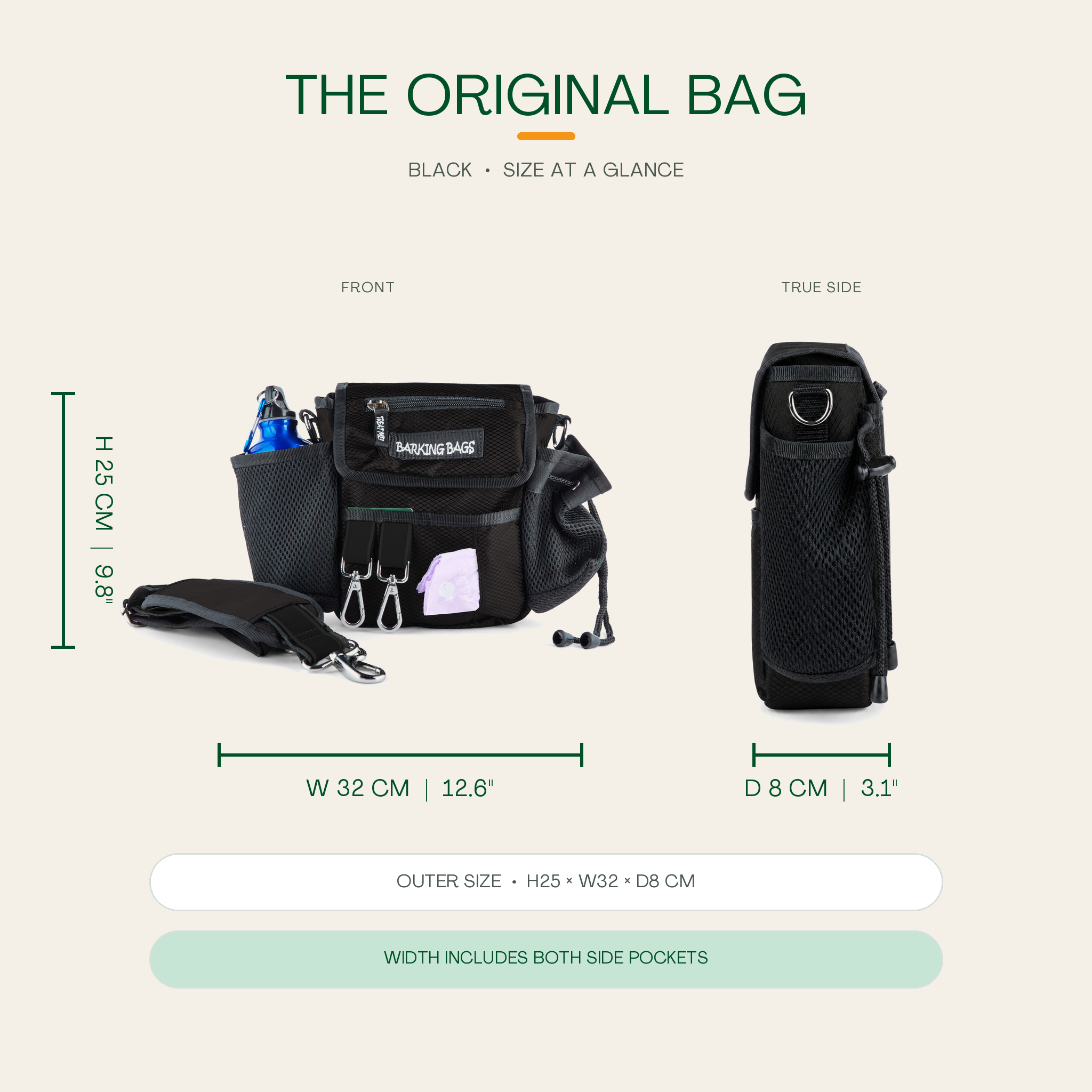
If you only ever carry the basics, you may not need a large bag. But if you regularly bring treats, toys, lead accessories, water, your phone, keys and personal items, a compact but well-organised bag will beat a larger bag with no structure. Bigger is not always better. The best choice is the one that gives each essential its own place without feeling overpacked.
It also helps to be honest about your habits. If you like everything zipped away, choose secure compartments. If you need quick one-handed access while training or managing a lead, open sections and easy-dispense features matter more. The right design often comes down to those small moments on a walk.
Start with capacity, not guesswork
One of the easiest mistakes is choosing a bag that looks neat online but cannot hold what you need once you are out the door. Start by mentally packing for a normal walk. Include the obvious items like poo bags, treats, keys and phone, then add the things you carry more often than you realise, such as hand sanitiser, a whistle, tennis ball, collapsible water bowl or a spare lead.
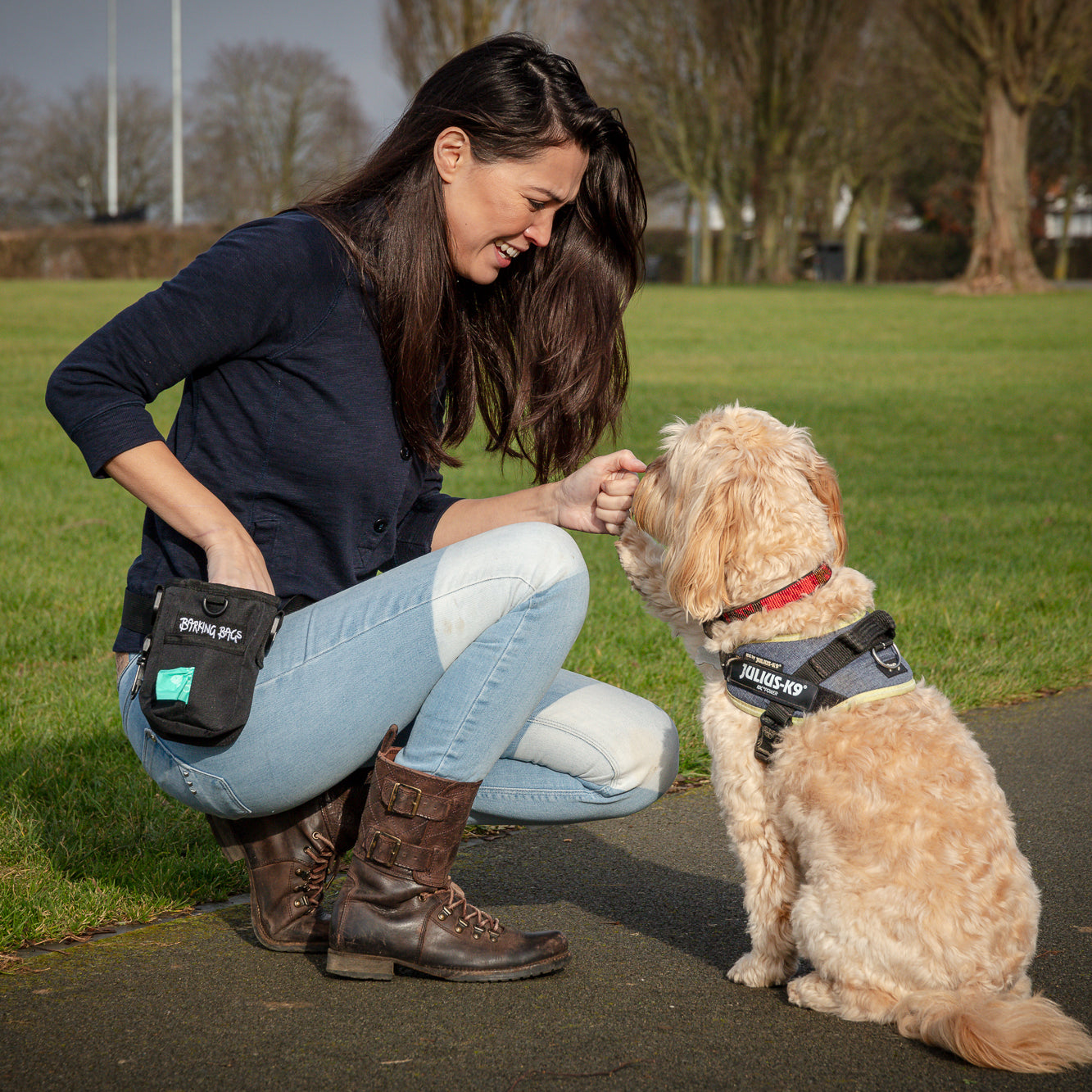
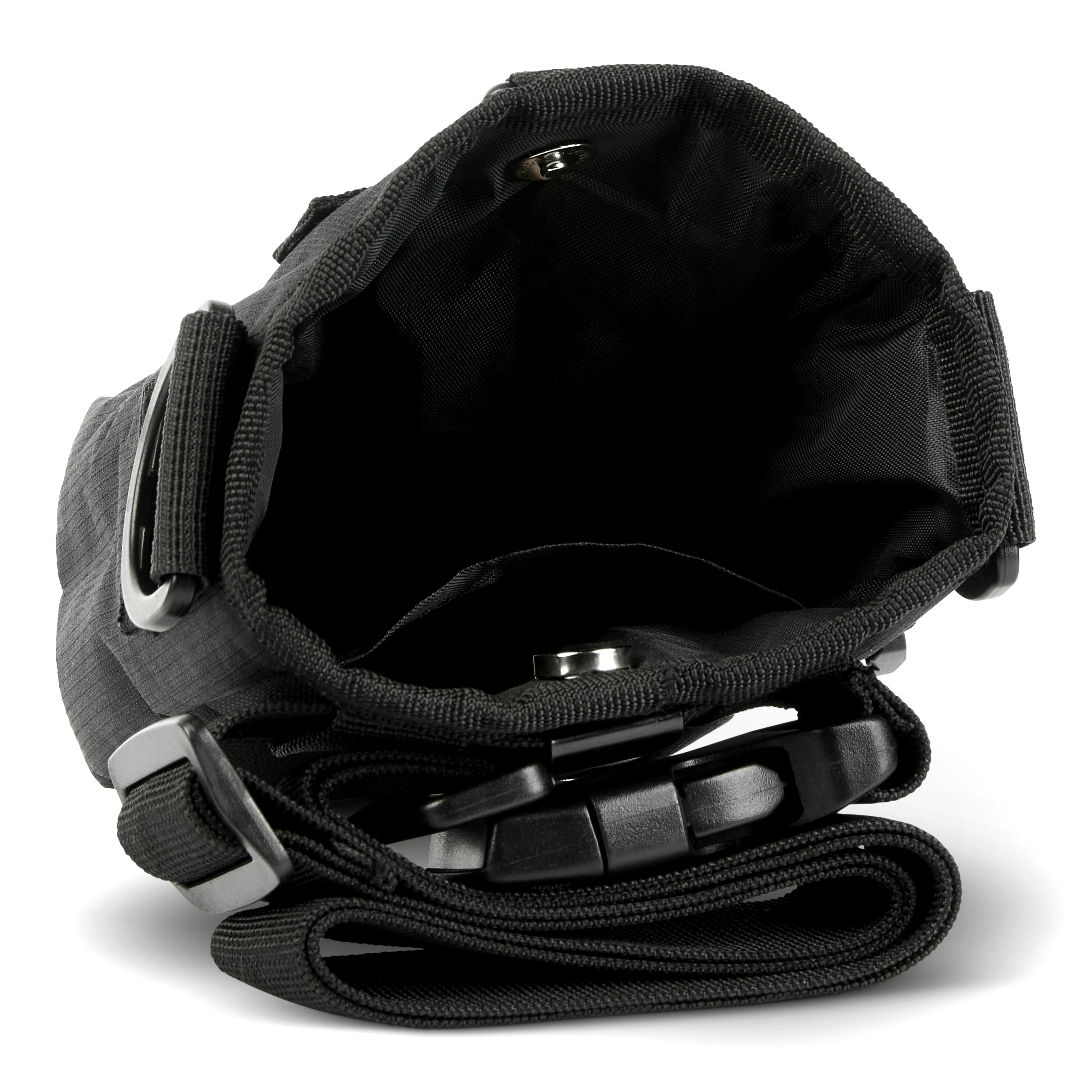
If you walk puppies or dogs in training, treat storage becomes especially important. You want easy access, but you also do not want crumbs ending up all over your purse, tissues or lip balm. In that case, a bag with a dedicated treat section or room to attach a separate treat pouch can make a real difference.
Professional dog walkers and multi-dog households need to think one step further. More dogs usually means more waste bags, more treats, more leads and a greater need for quick organisation. A bag that works for one short daily walk may be frustrating for repeated use.
What should fit comfortably?
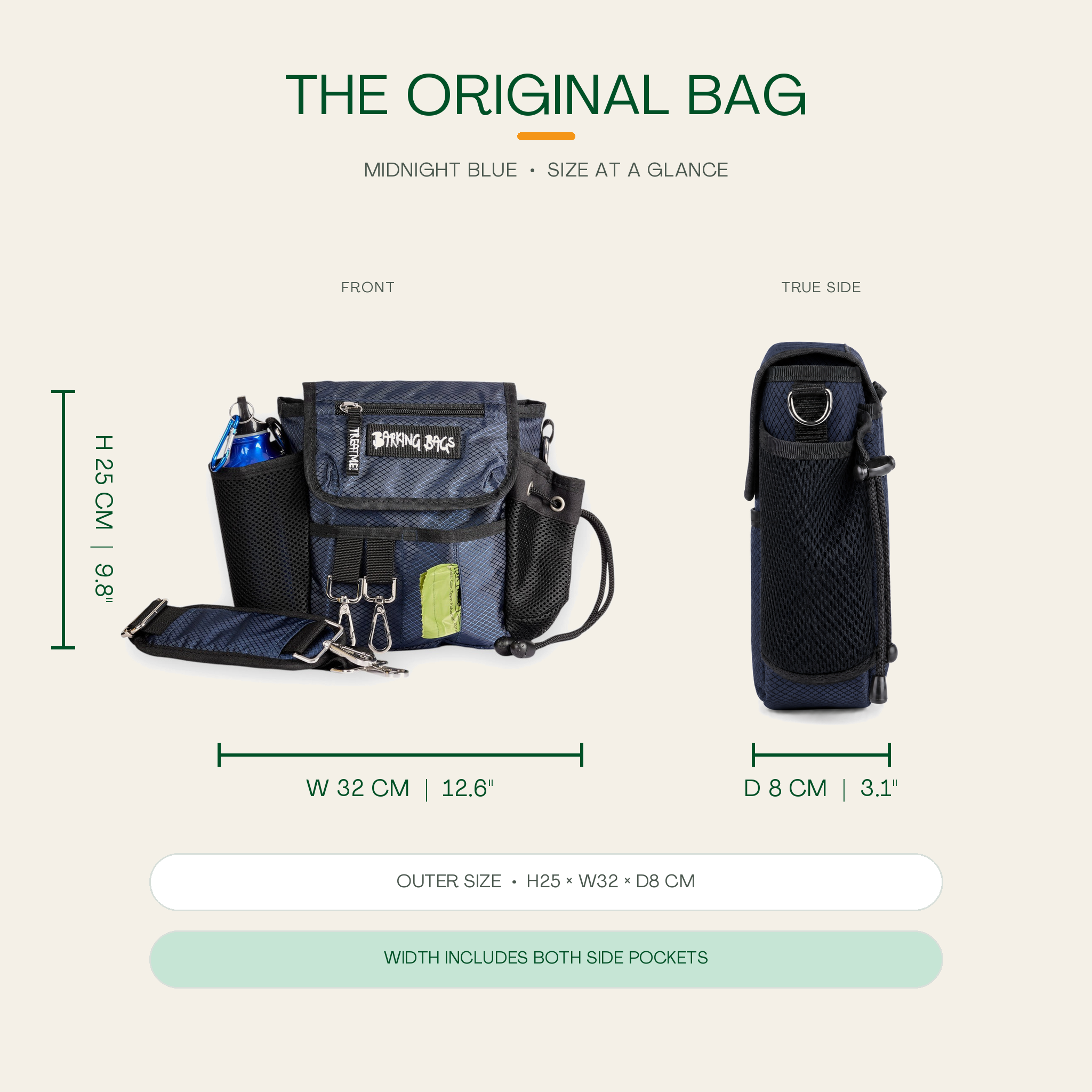
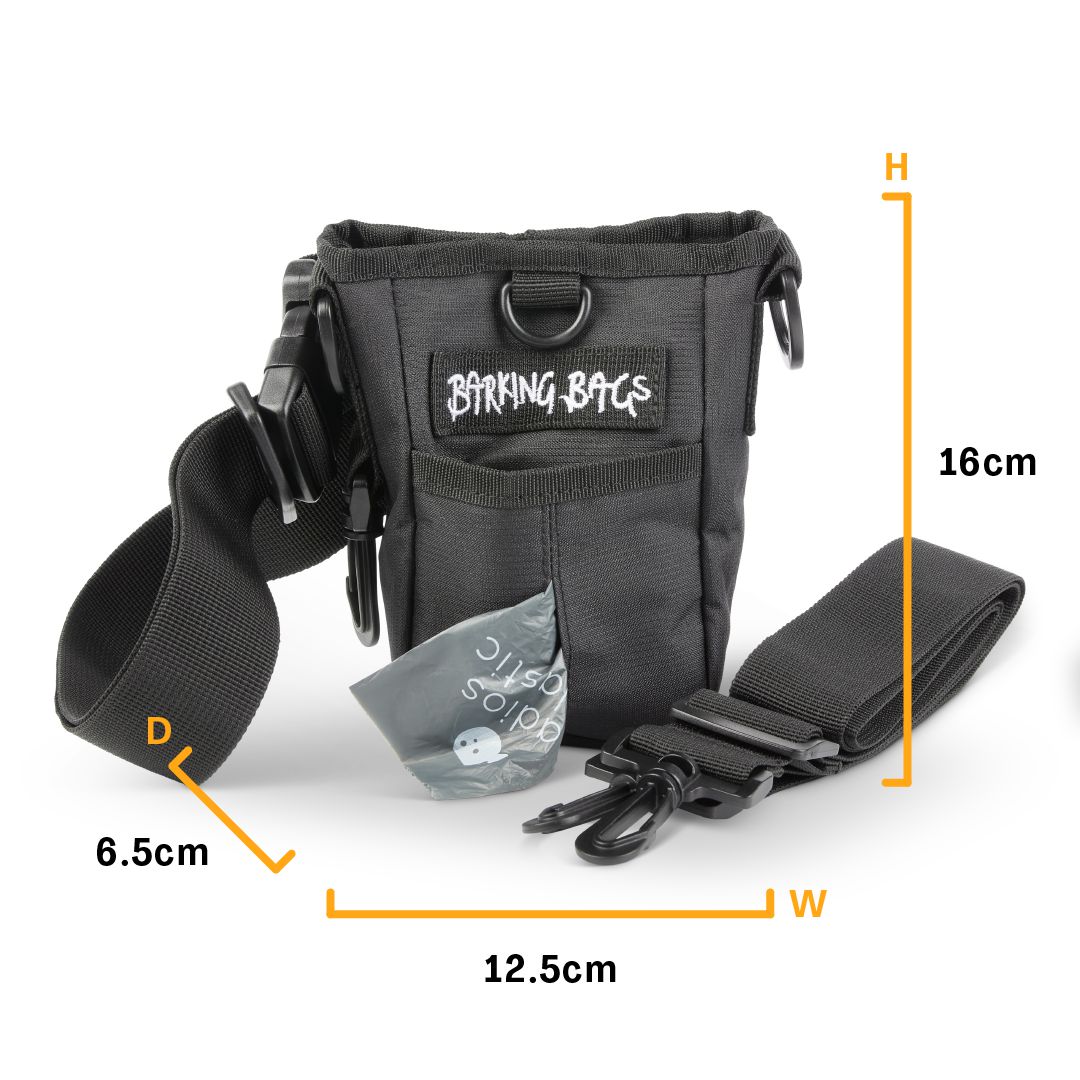
A well-sized dog walking bag should hold your walking essentials without becoming heavy, misshapen or awkward against the body. If you have to force the zip shut or keep leaving things behind, it is too small. If items slide around and disappear into empty space, it may be too large for your needs.
That balance matters because a dog walking bag is not just storage. It is part of your routine. You should be able to grab what you need without stopping the walk to rummage.
Prioritise compartments that make sense
Good organisation is what separates a dedicated dog walking bag from an ordinary crossbody or backpack. You are not just carrying things. You are carrying things that need to stay separate.
Treats should not sit next to your keys. Used poo bags definitely should not go anywhere near your phone. Your valuables need to be secure, but still easy to access. A practical layout helps with all of that.
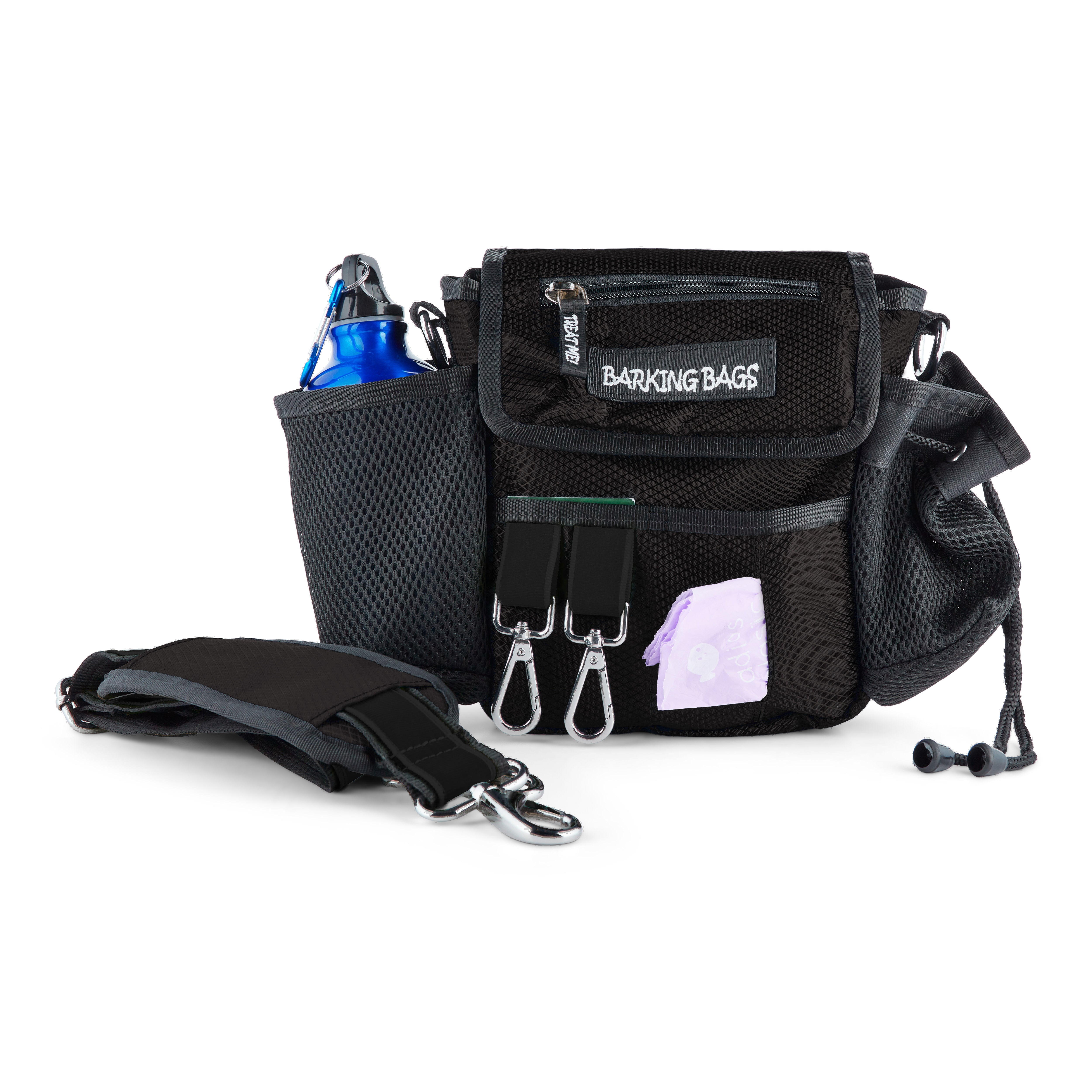
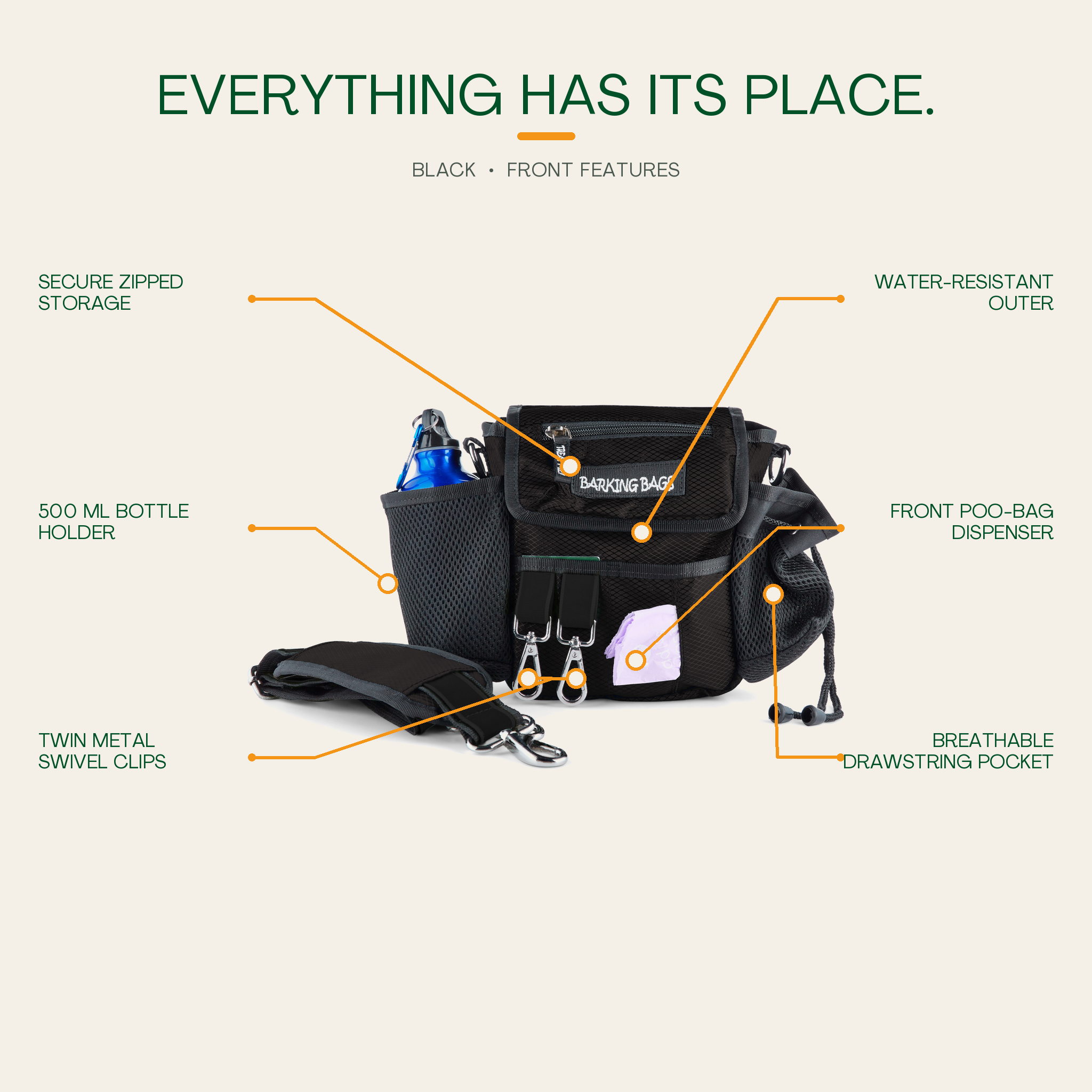
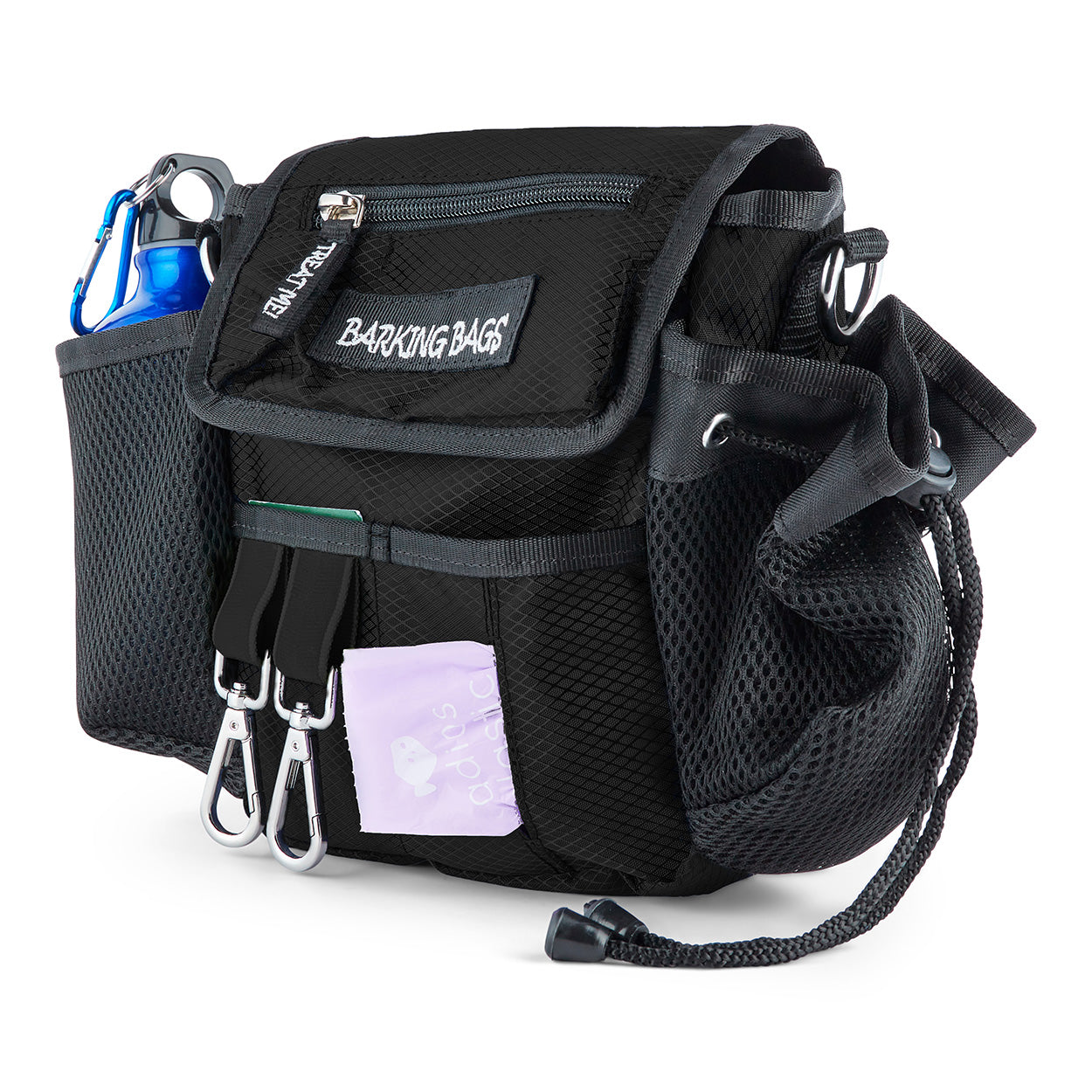
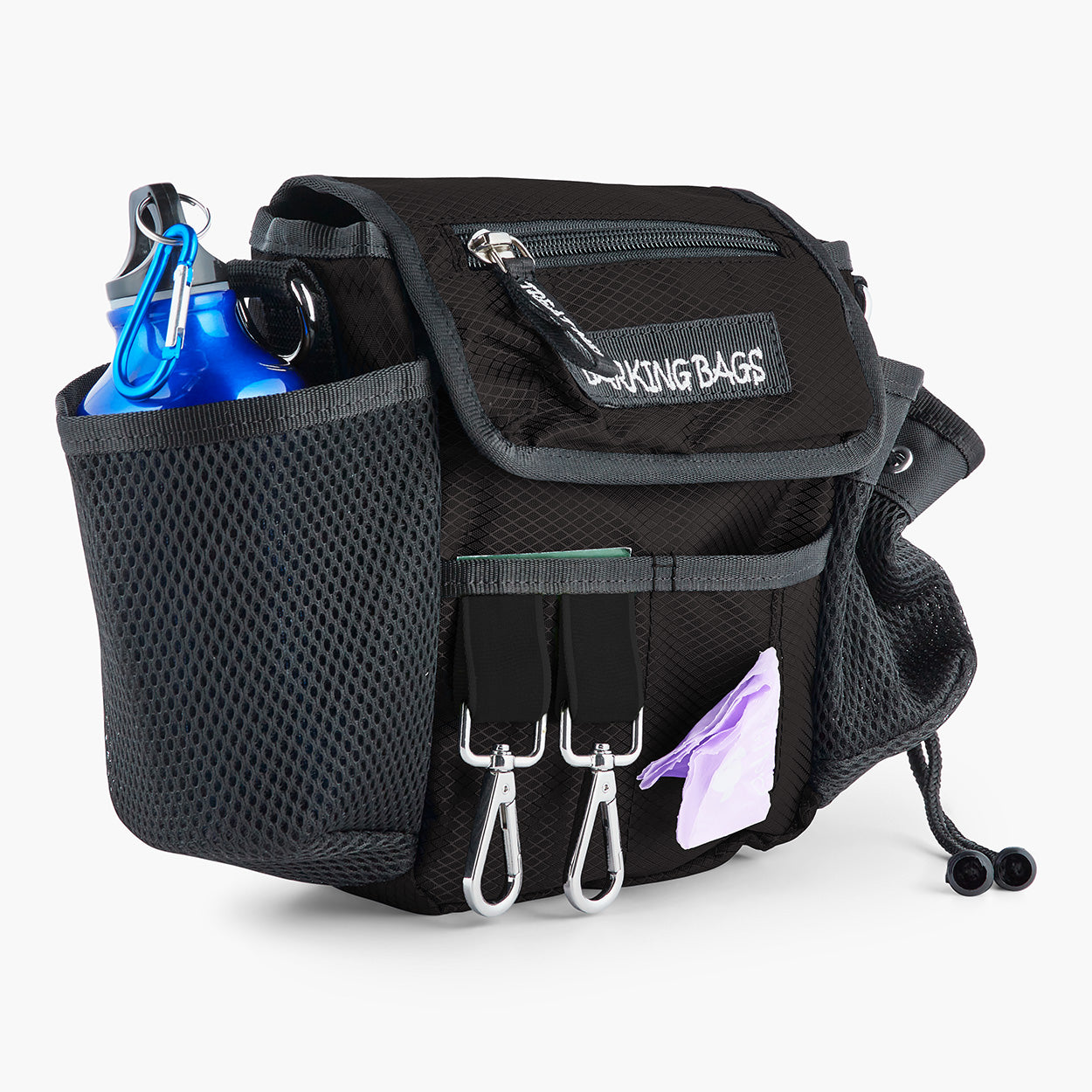
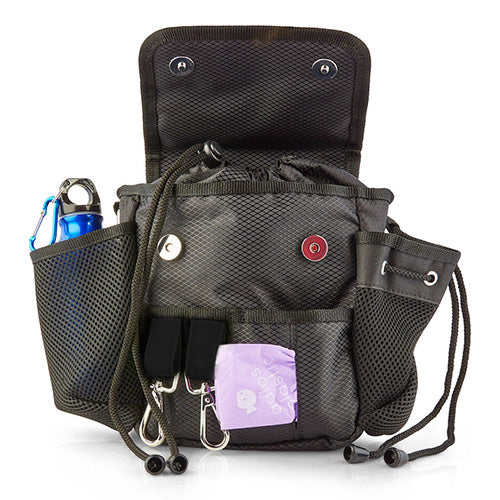
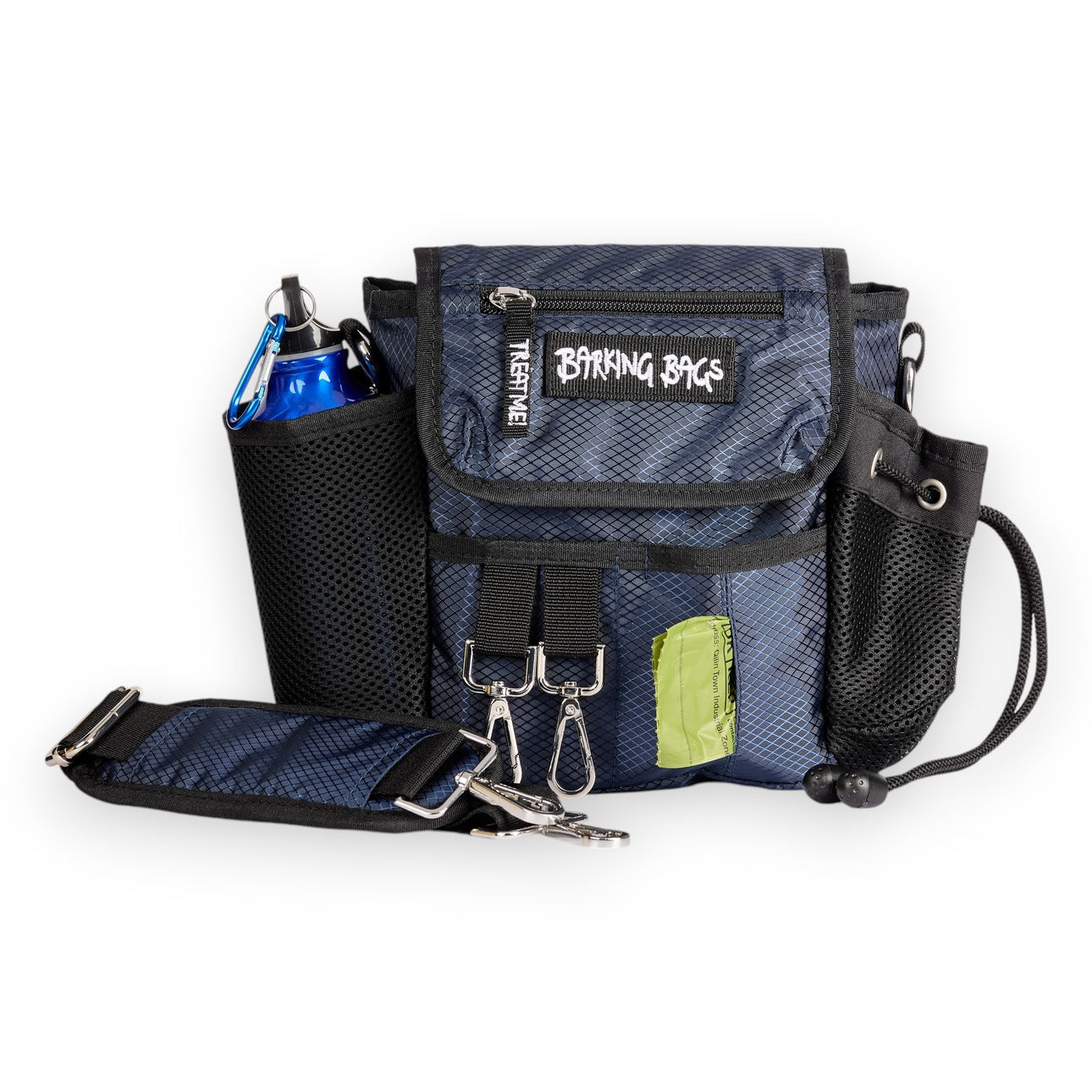
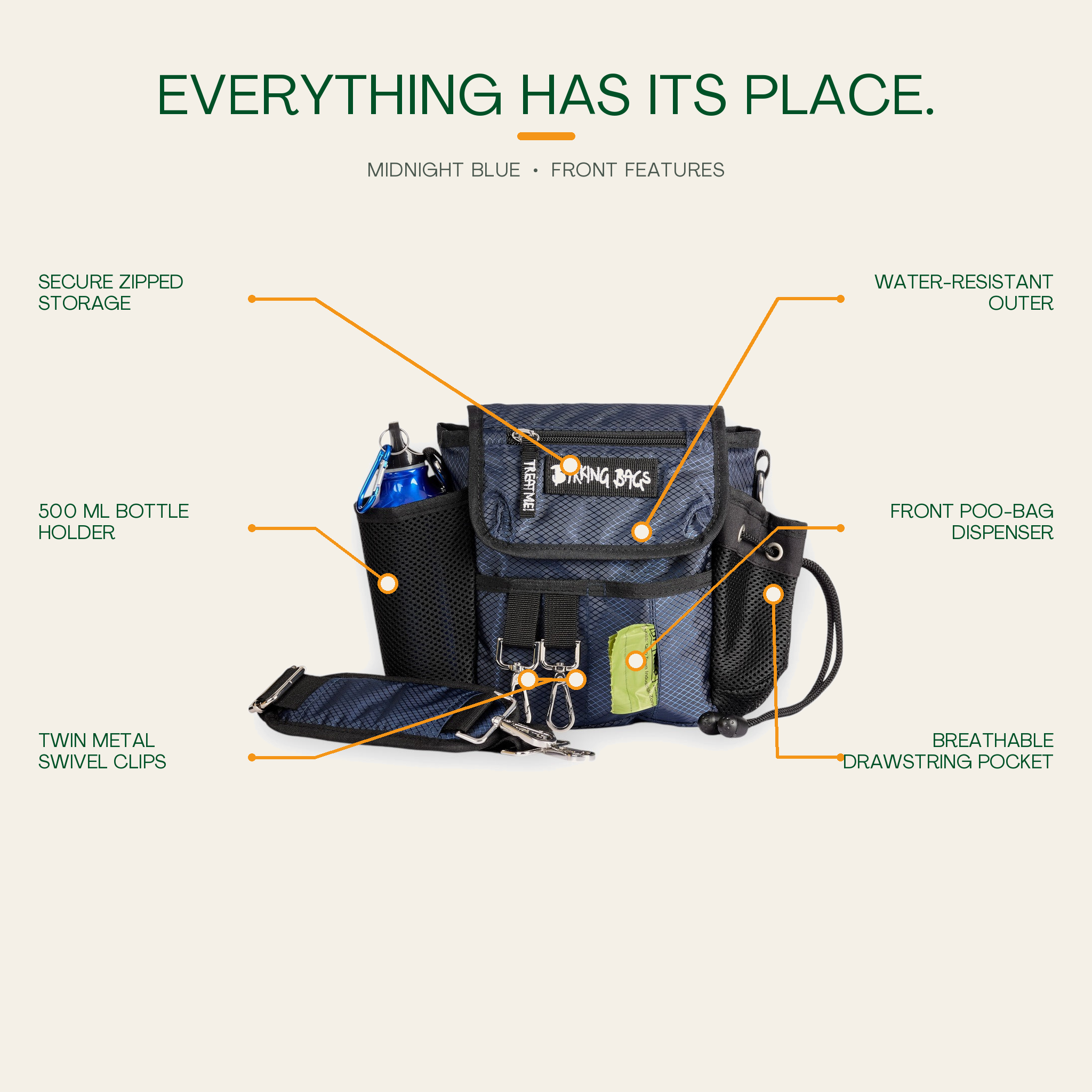
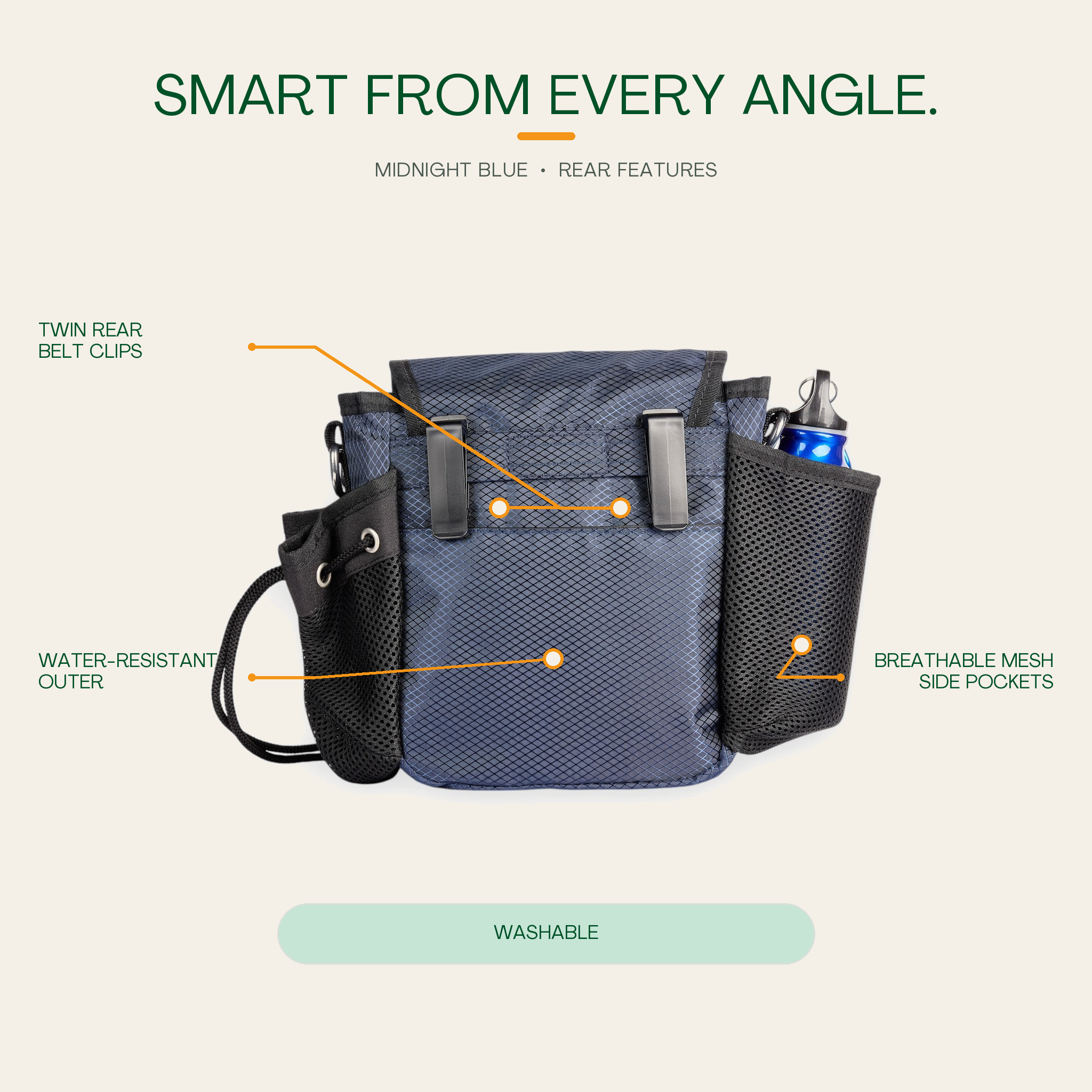
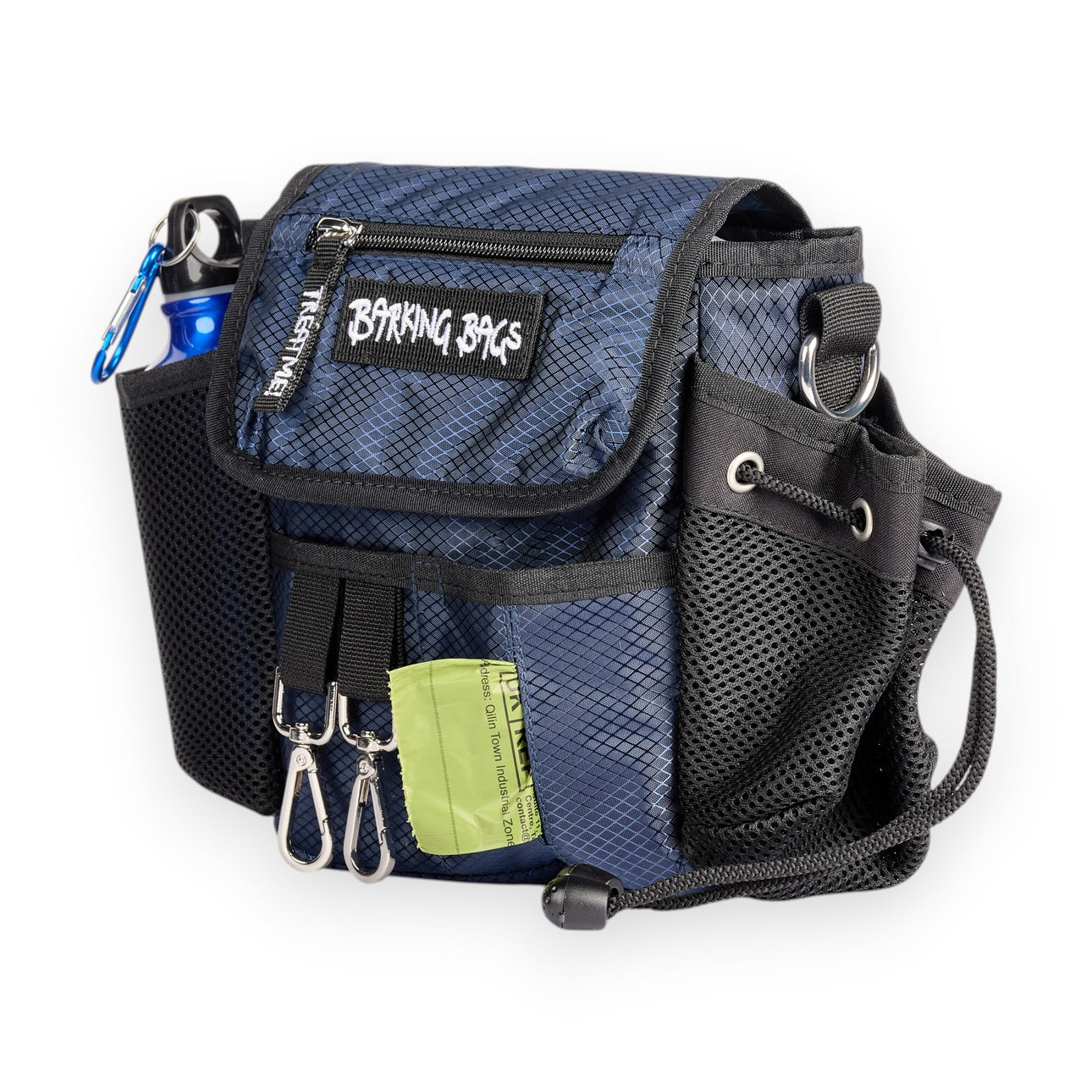
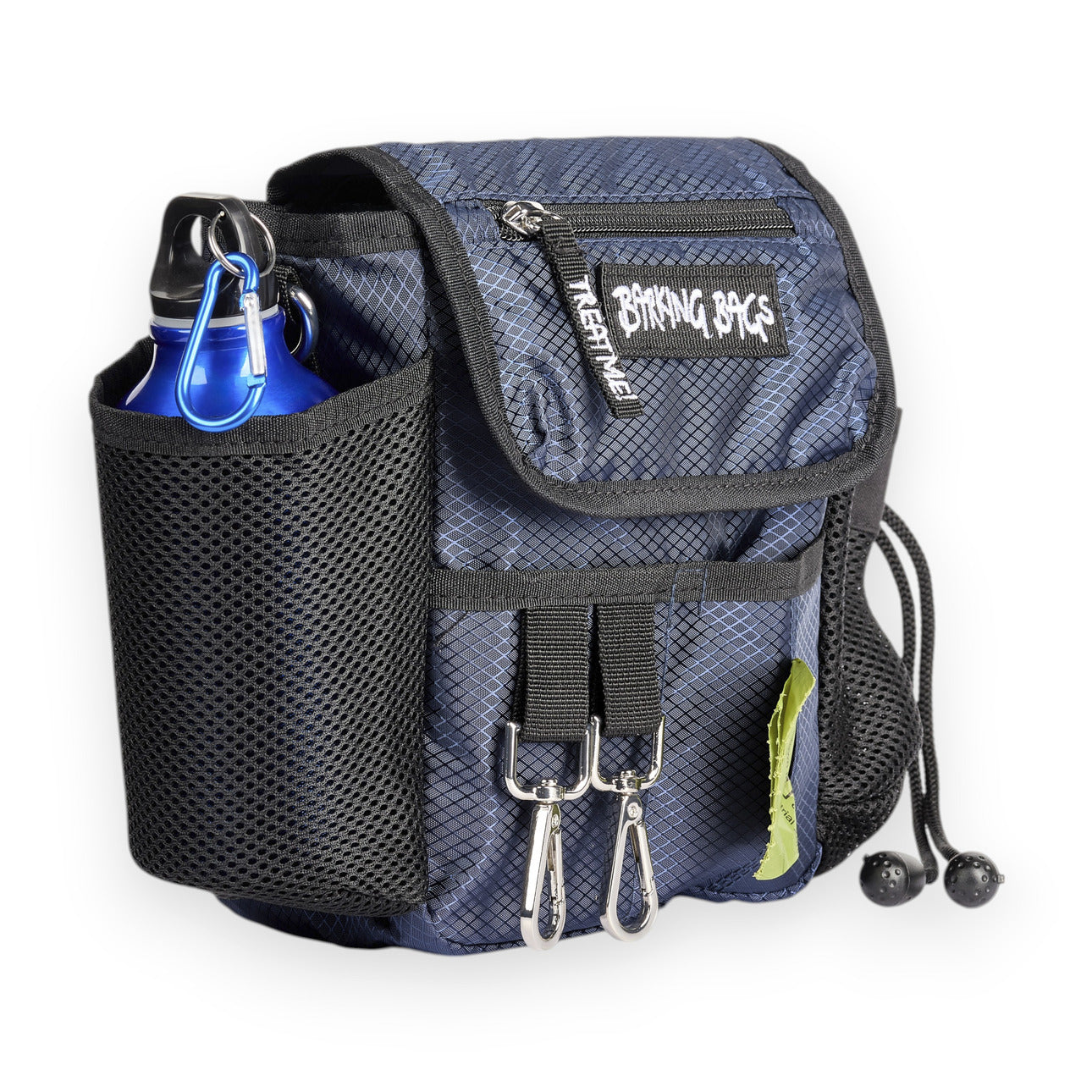
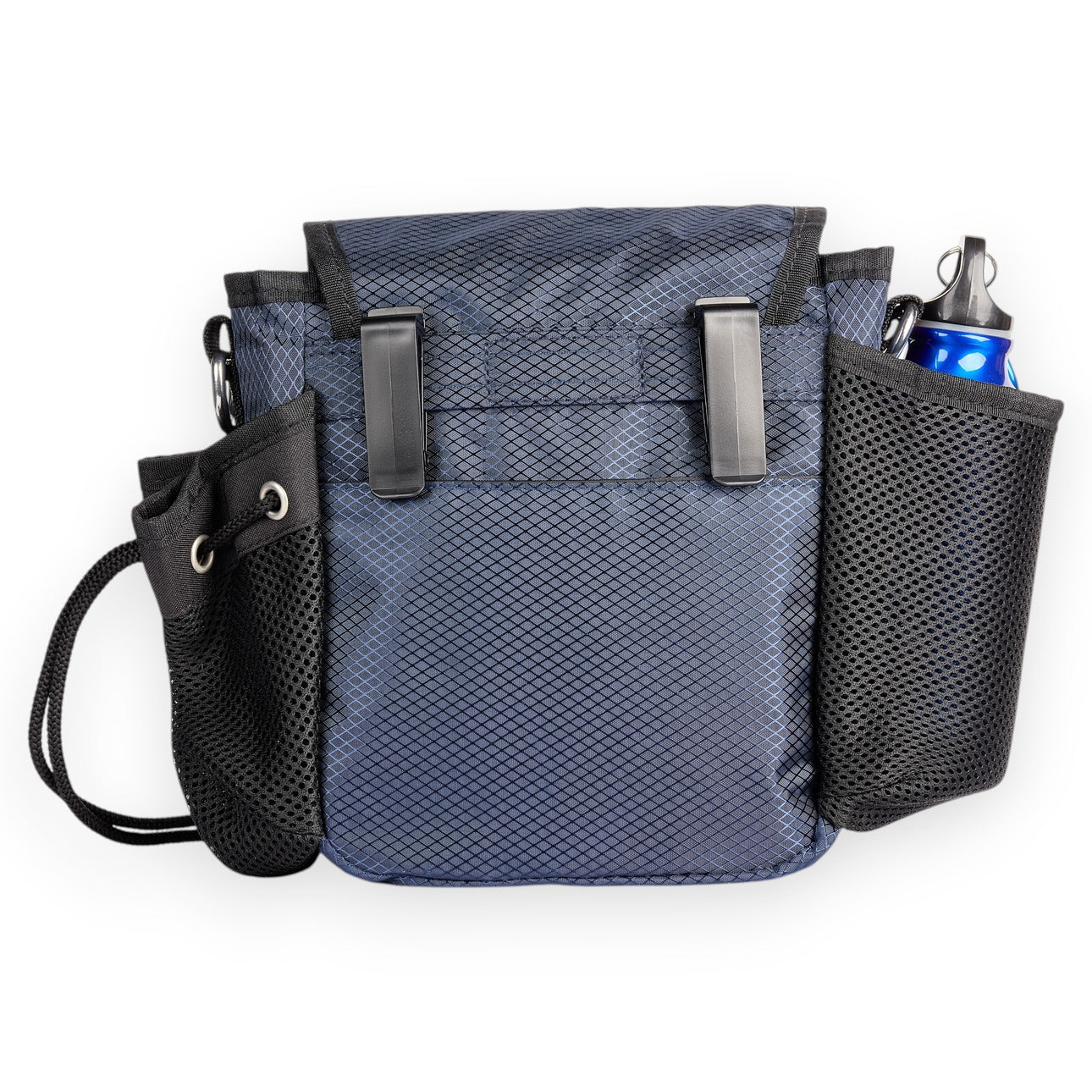
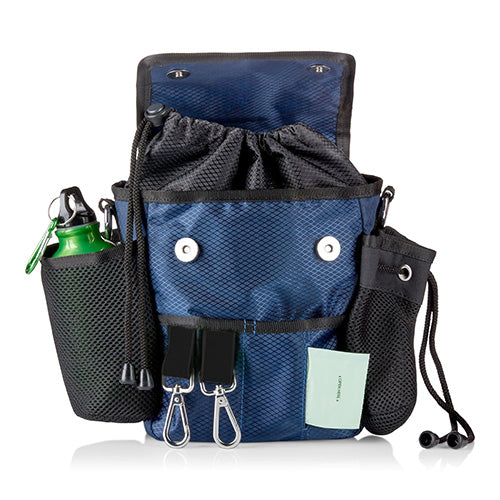
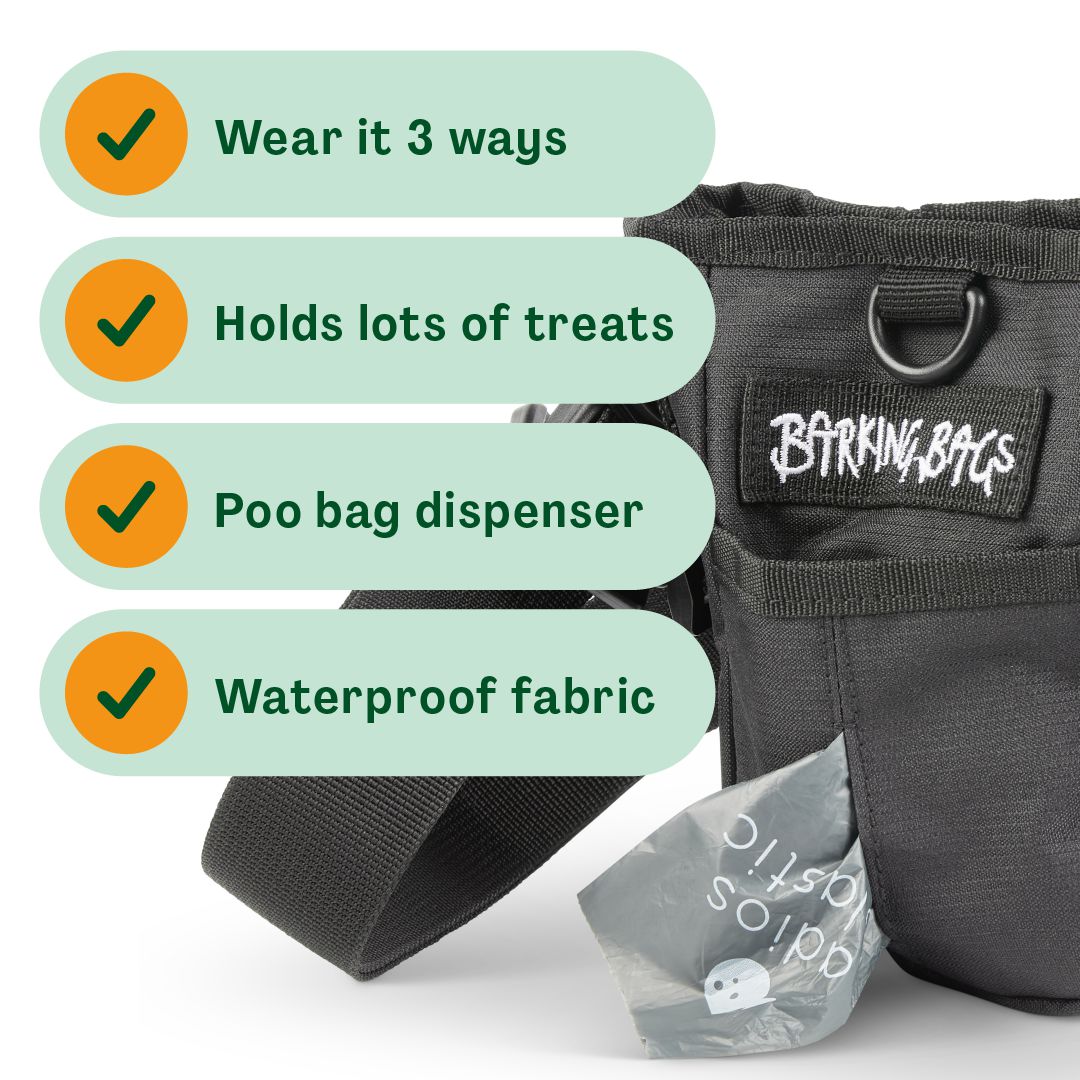
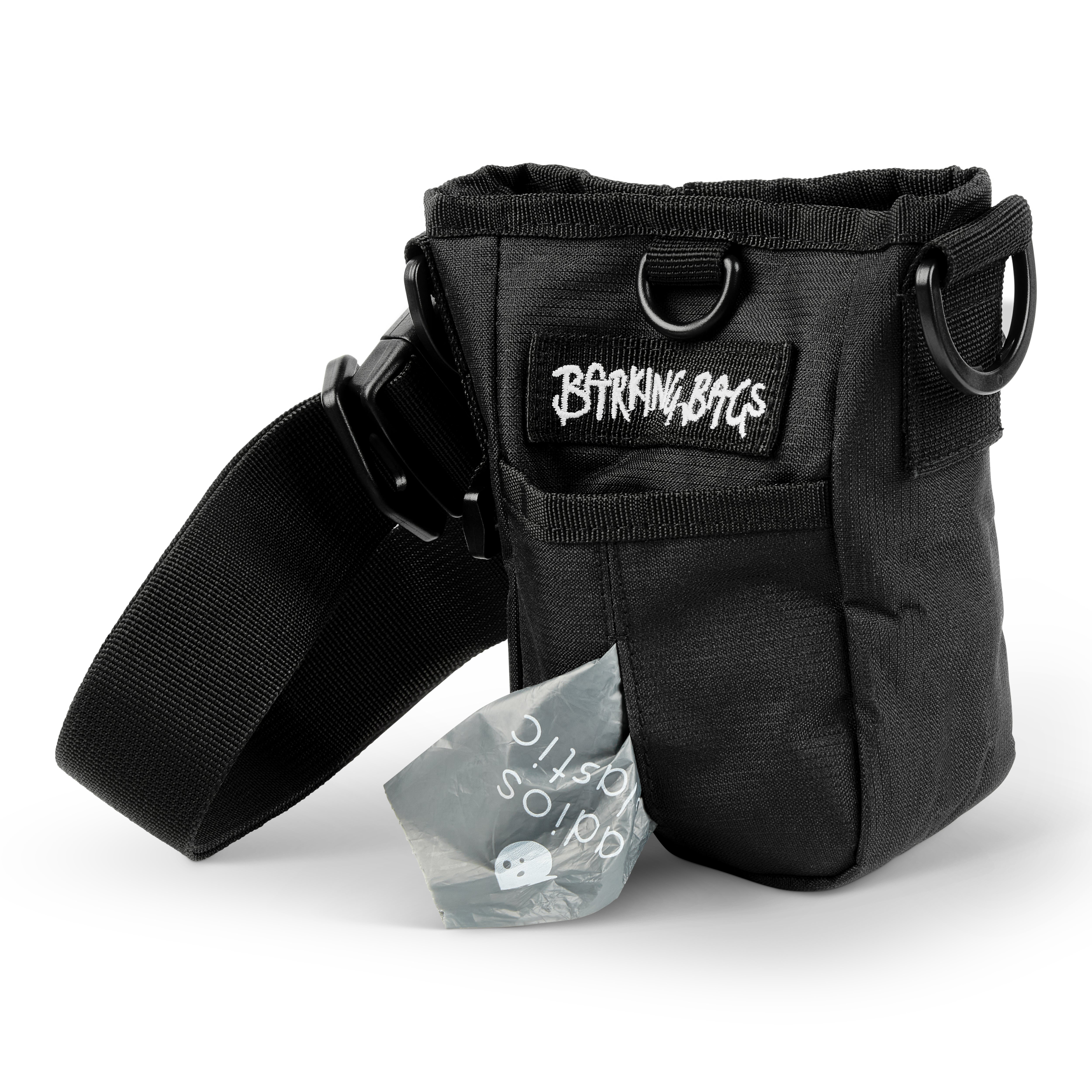
Look for bags with distinct compartments for dog essentials and personal items. A zipped pocket for valuables is useful, especially if you walk in busy areas. An external poo bag dispenser can be even better, because it removes one of the most annoying little delays on a walk. If you have ever tried to tear off a bag while your dog is pulling towards a hedge, you will know why that matters.
The best compartment layout depends on how you use it. Some owners want everything neatly separated. Others prefer one main section and a couple of smaller pockets. There is no universal answer, but there should be logic to the design.
Comfort matters more than you think
A dog walking bag can look great in photos and still be irritating to wear after twenty minutes. This is where straps, weight distribution and overall shape really matter.
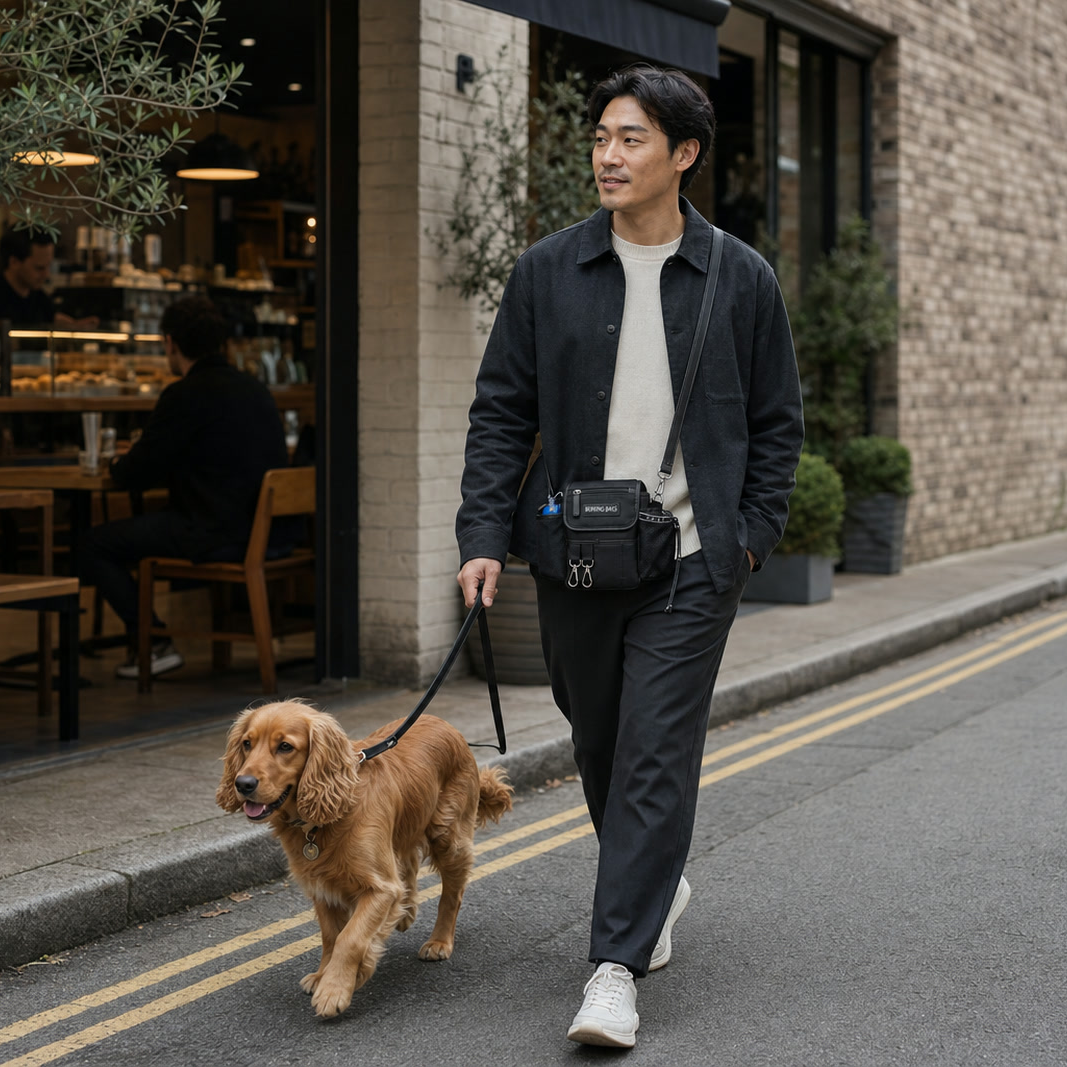
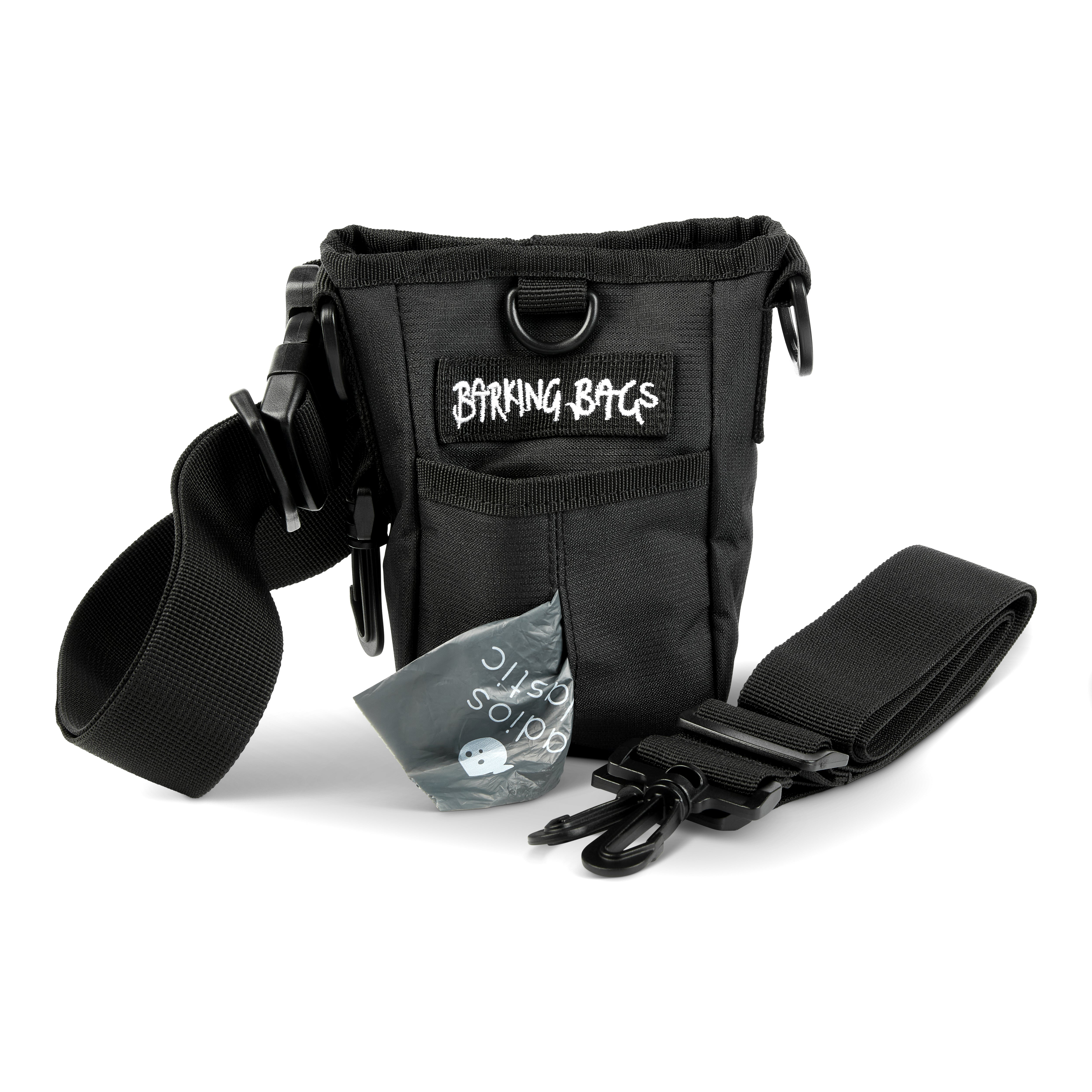
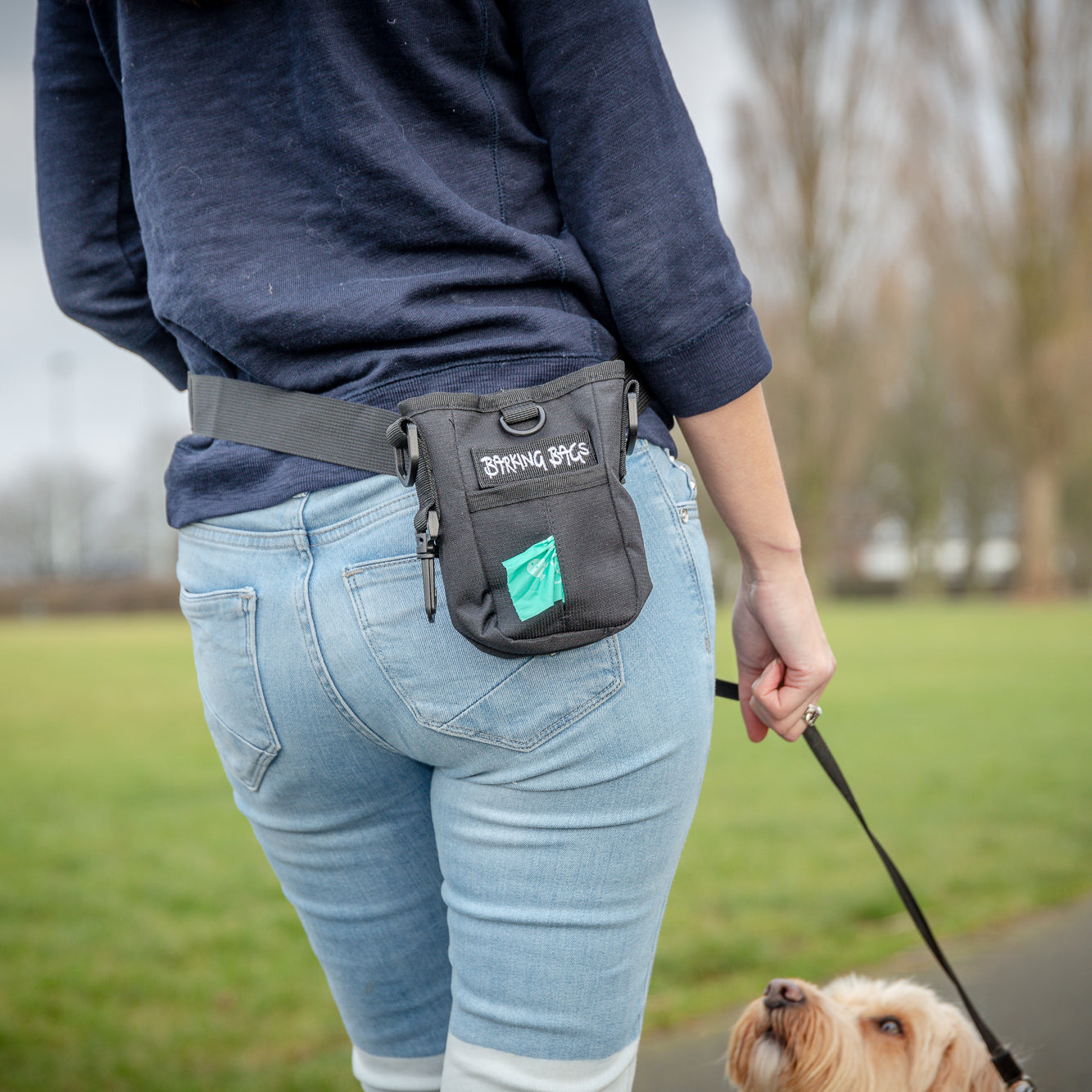
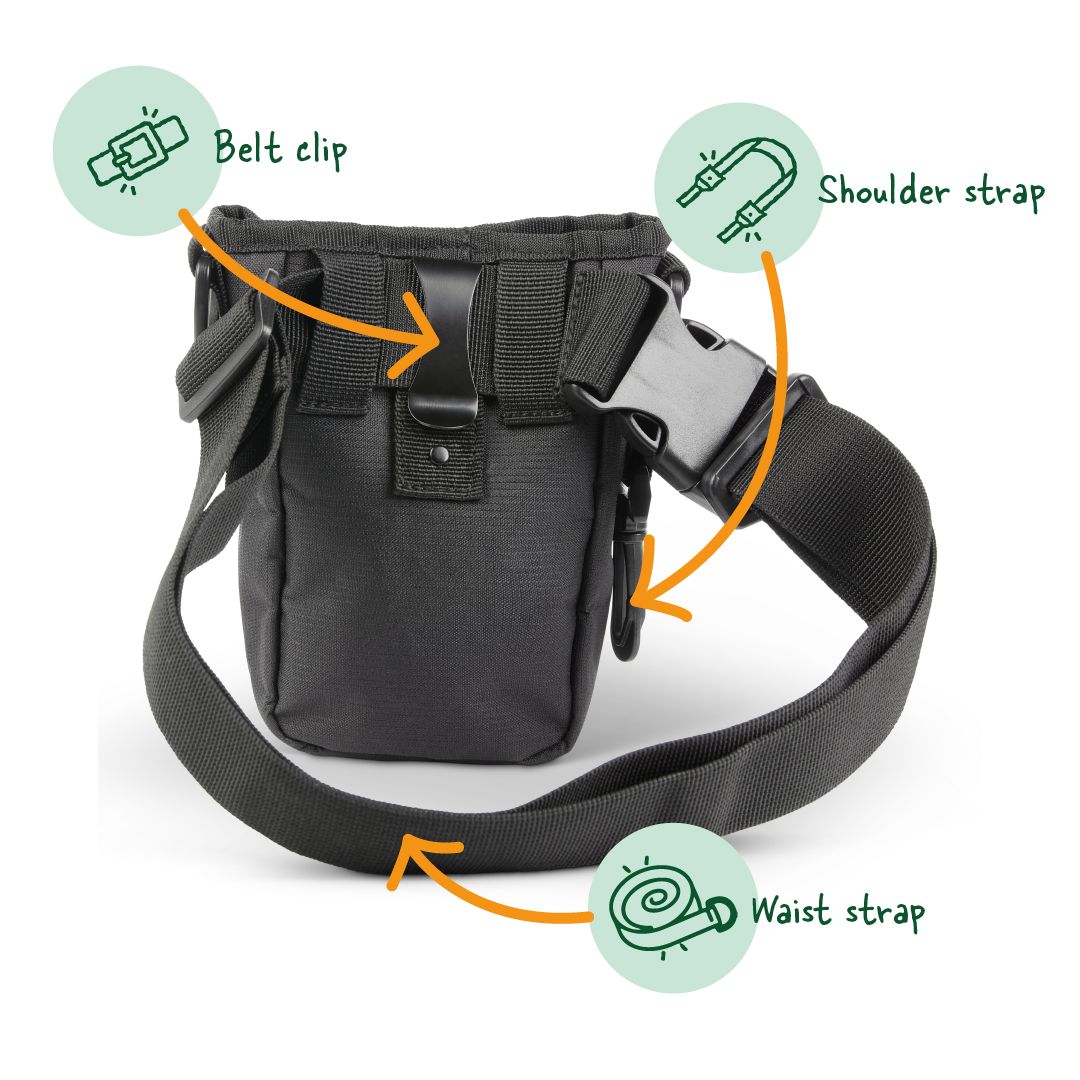
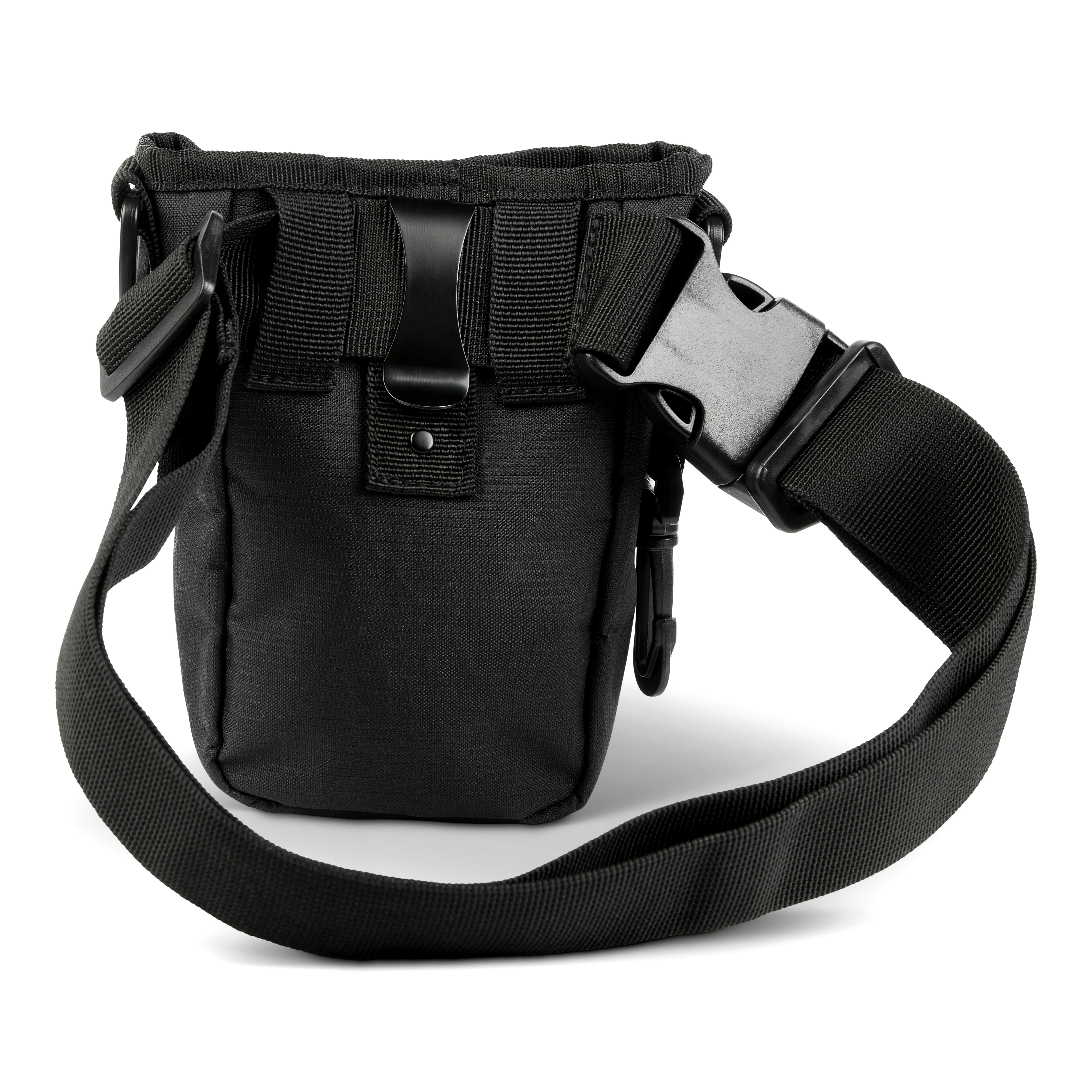
Crossbody styles are popular for good reason. They keep your hands free, sit close to the body and usually feel more secure when bending down, training or walking at pace. Adjustable straps are worth looking for, especially if you switch between heavier coats in winter and lighter layers in summer.
Pay attention to where the bag sits when worn. If it constantly slips, swings or digs in, it will not feel practical for long. A flatter profile often works better than a bulky shape, especially for everyday dog walks where you want movement to feel easy.
If you are walking more than one dog, comfort becomes even more important. Reaching, bending, rewarding and untangling leads is enough to deal with without a bag that gets in the way.
Choose materials that can handle actual dog walks
Dog walking is messy. That does not mean your bag has to look scruffy, but it does mean the materials need to cope with muddy fields, wet weather, treat residue and daily use.
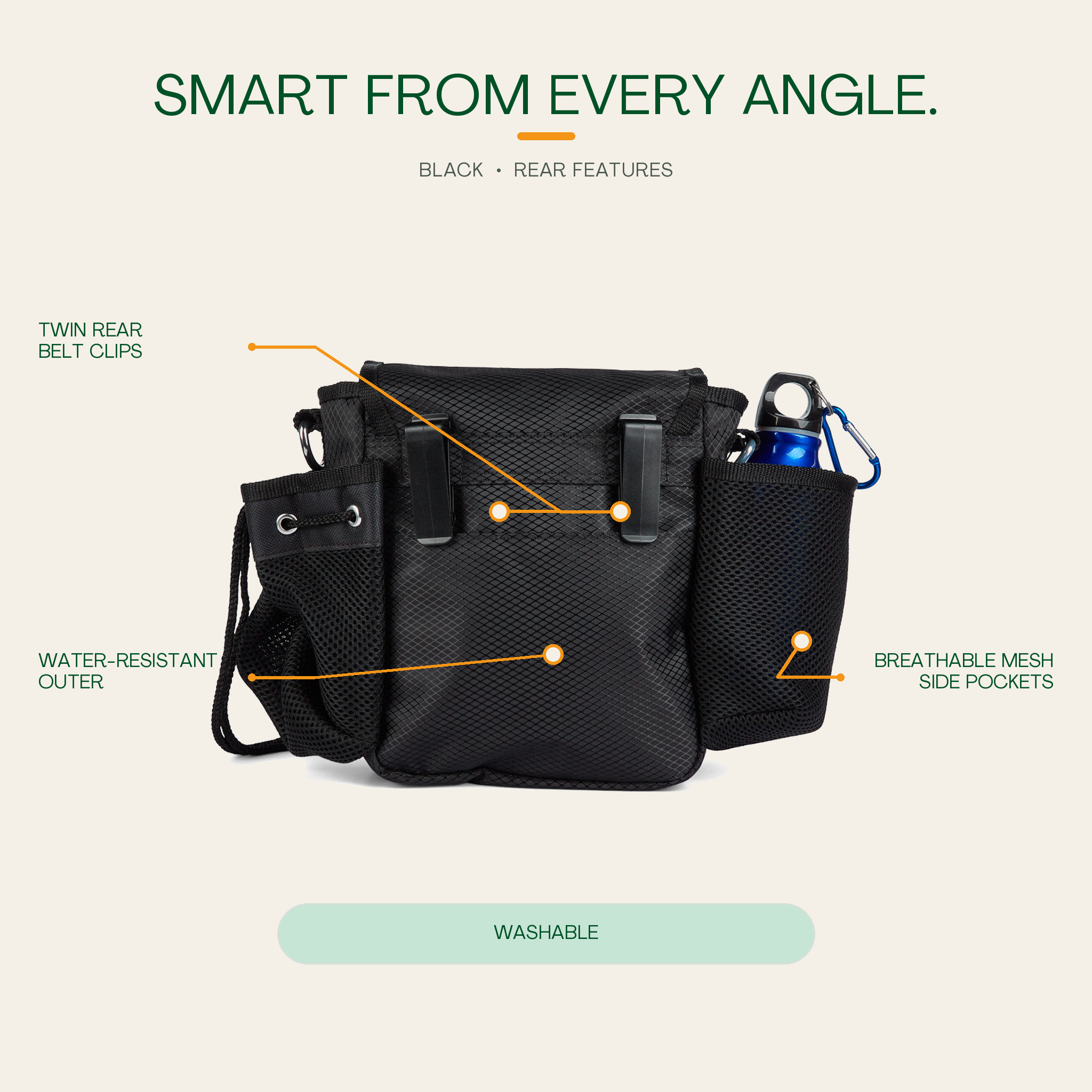
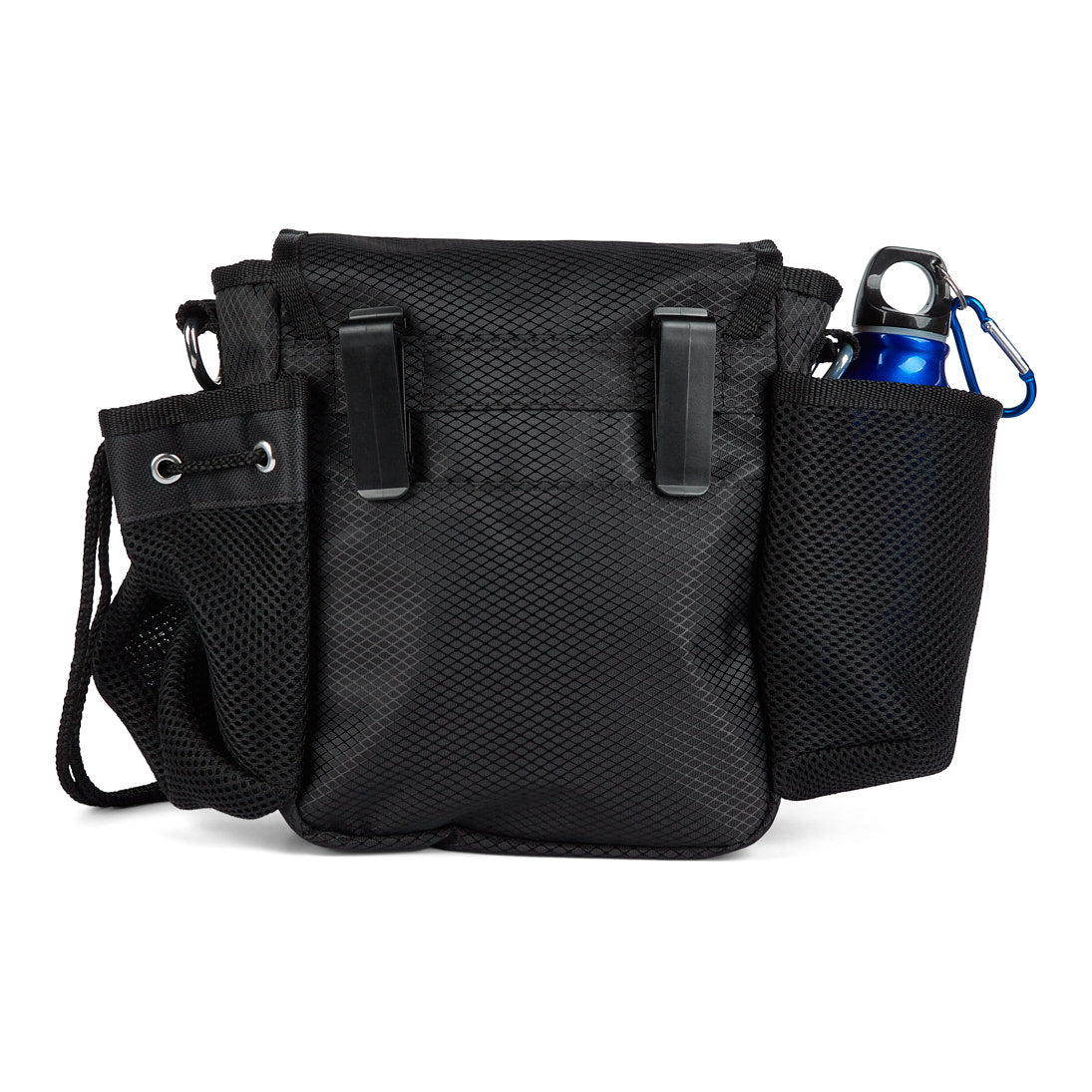
Easy-clean fabrics are a practical win. Wipeable surfaces and durable linings save time and help the bag keep its shape and finish. If your walks continue whatever the weather, water-resistant materials are also worth considering. In the UK, that is less of a bonus and more of a sensible expectation.
This is one of those areas where trade-offs matter. Soft fabrics can feel lighter and more relaxed, but they may show wear more quickly or absorb smells. More structured materials can look smarter and hold their shape better, though they may feel less flexible if you like to stuff in an extra toy or towel. Think about which matters more to you.
Style still counts
A dog walking bag is a practical buy, but that does not mean it should look purely functional. For many owners, the best bag is one that fits into everyday life without screaming pet kit.
That matters if you wear it on the school run, to the café or while running errands straight after your walk. A well-designed bag should feel like an accessory you are happy to carry, not something you only tolerate because it is useful.
Style is personal, of course. Some people want a clean, minimal look in a neutral shade. Others prefer something more statement-making. The key point is that function and style should work together. You should not have to choose between a bag that looks good and a bag that works properly.
For many dog owners, that balance is exactly why a dedicated design makes more sense than repurposing an old handbag or gym bag. It is built for the job, but still designed to be seen.
Think beyond the first week
When deciding how to choose a dog walking bag, it helps to think long term. Will it still suit you in six months? Will it work through different seasons? Could it adapt if your dog is still in training, or if your routine changes?
A bag that feels useful on day one but frustrating after regular use is not a good buy. Durability, layout and flexibility all affect whether it becomes part of your routine or ends up in the cupboard.
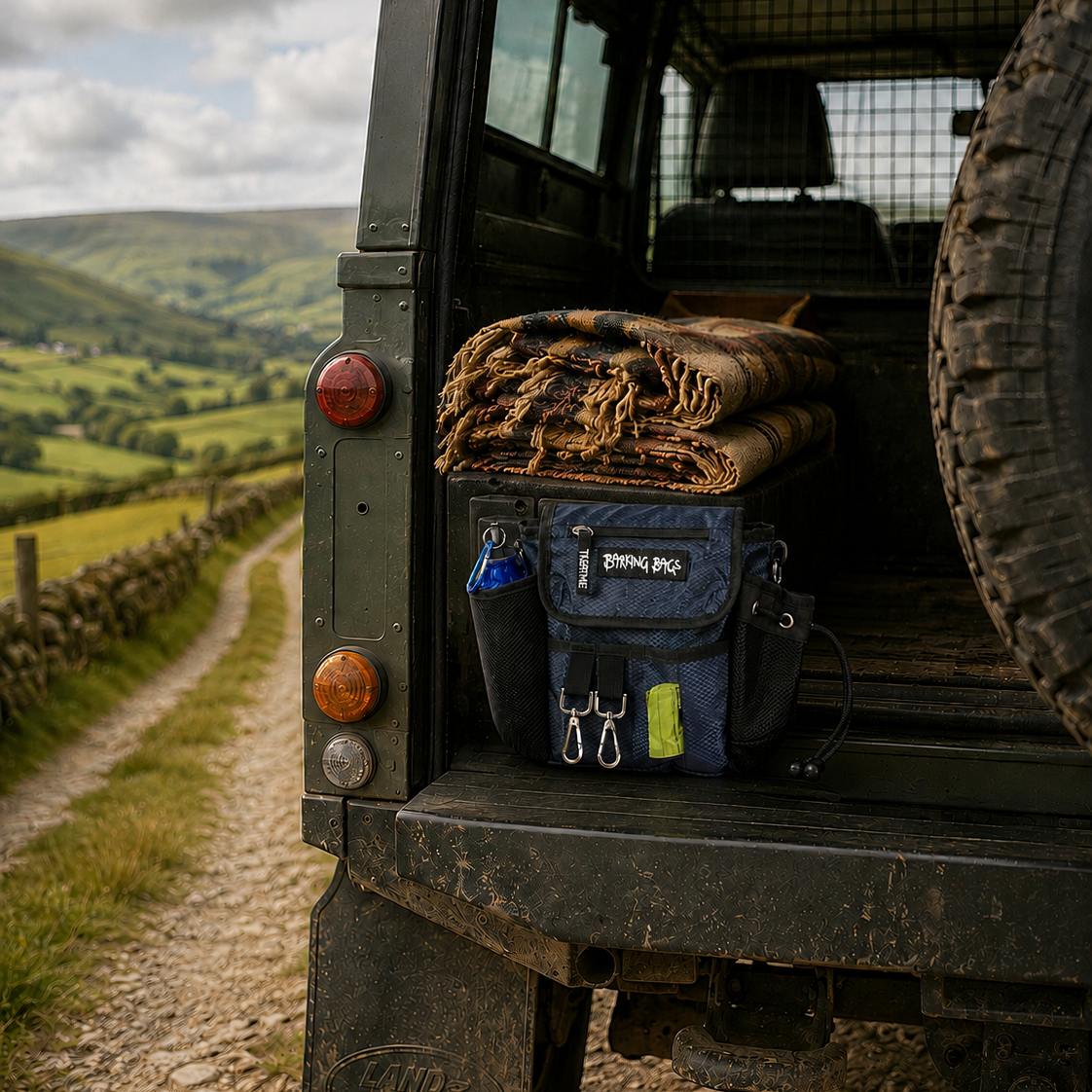
This is where specialist brands often stand out. A bag designed specifically for dog walking usually reflects the little realities generic bags miss, from treat access to waste bag storage to carrying everyday essentials without compromise. Barking Bags, for example, is built around that exact problem: giving dog owners a smarter, more organised system that still looks the part.
A quick sense check before you buy
Before choosing, ask yourself a few simple questions. Can you reach the things you use most often without digging around? Is there enough room for both dog essentials and your own items? Will it be comfortable in a coat and a T-shirt? Can you clean it easily after a muddy walk?
If the answer is yes across the board, you are probably looking at a bag that will genuinely make your walks easier. If not, keep looking. Small frustrations add up quickly when something is used every day.
The best dog walking bag is not the one with the most features. It is the one that suits your dog, your pace and your version of a normal walk. Choose the bag that makes heading out feel simpler, and you will notice the difference long before you get to the park gate.