
You only notice how awkward your phone is on a dog walk when you are trying to pick up after your dog, hold the lead, grab a treat and stop your mobile sliding out of your coat pocket at the same time. If you have been wondering how to carry a phone on dog walks without stuffing it into a random pocket or juggling it in one hand, the answer usually comes down to one thing - giving it a proper place.
For most dog owners, the phone is not optional anymore. It is your torch on darker evenings, your map on longer routes, your camera for muddy-face moments, and your way to call someone if a walk goes wrong. The problem is that many people still carry it as an afterthought. That is where dog walks start to feel more chaotic than they need to.
Why your phone needs a proper place on every walk
A loose phone sounds manageable until the practical bits of a walk kick in. Dogs pull unexpectedly. Leads twist. Waste bags need one hand free. Treats come out quickly in training moments. If your phone is balanced in a leggings pocket or buried in a handbag that was never designed for dog walking, it becomes one more thing to manage.
There is also the safety side. A phone that is hard to reach is not much use if you need directions, need to call for help, or need to check a location quickly. On the flip side, a phone that is too exposed can fall out, get wet, or end up cracked after one sharp lunge towards a squirrel.
The best setup keeps your phone secure, easy to grab and separate from messier dog walking essentials. That last point matters more than people think. Nobody wants their screen sharing space with damp poo bags, dog treats or a leaking tennis ball.
How to carry a phone on dog walks without using your hands
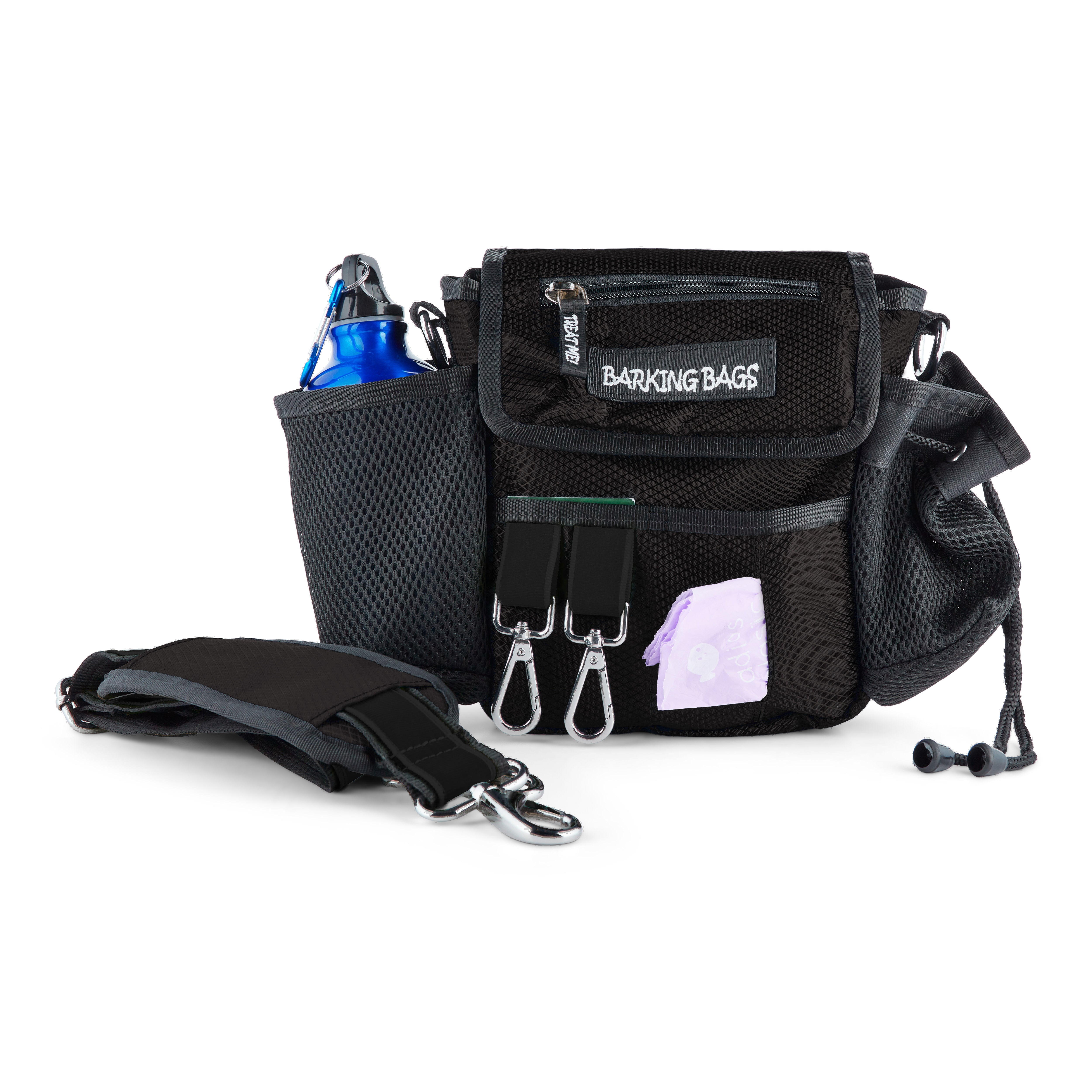
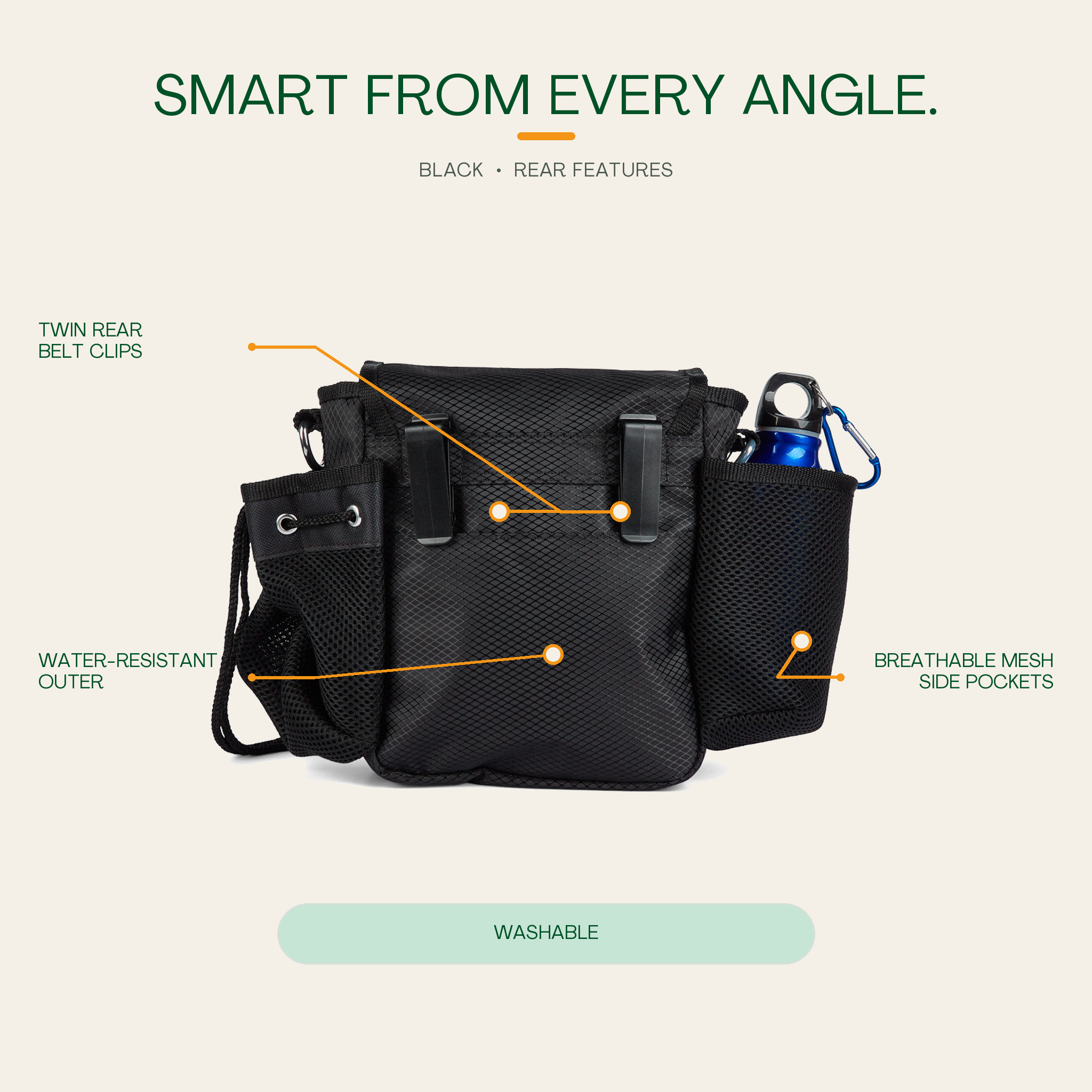
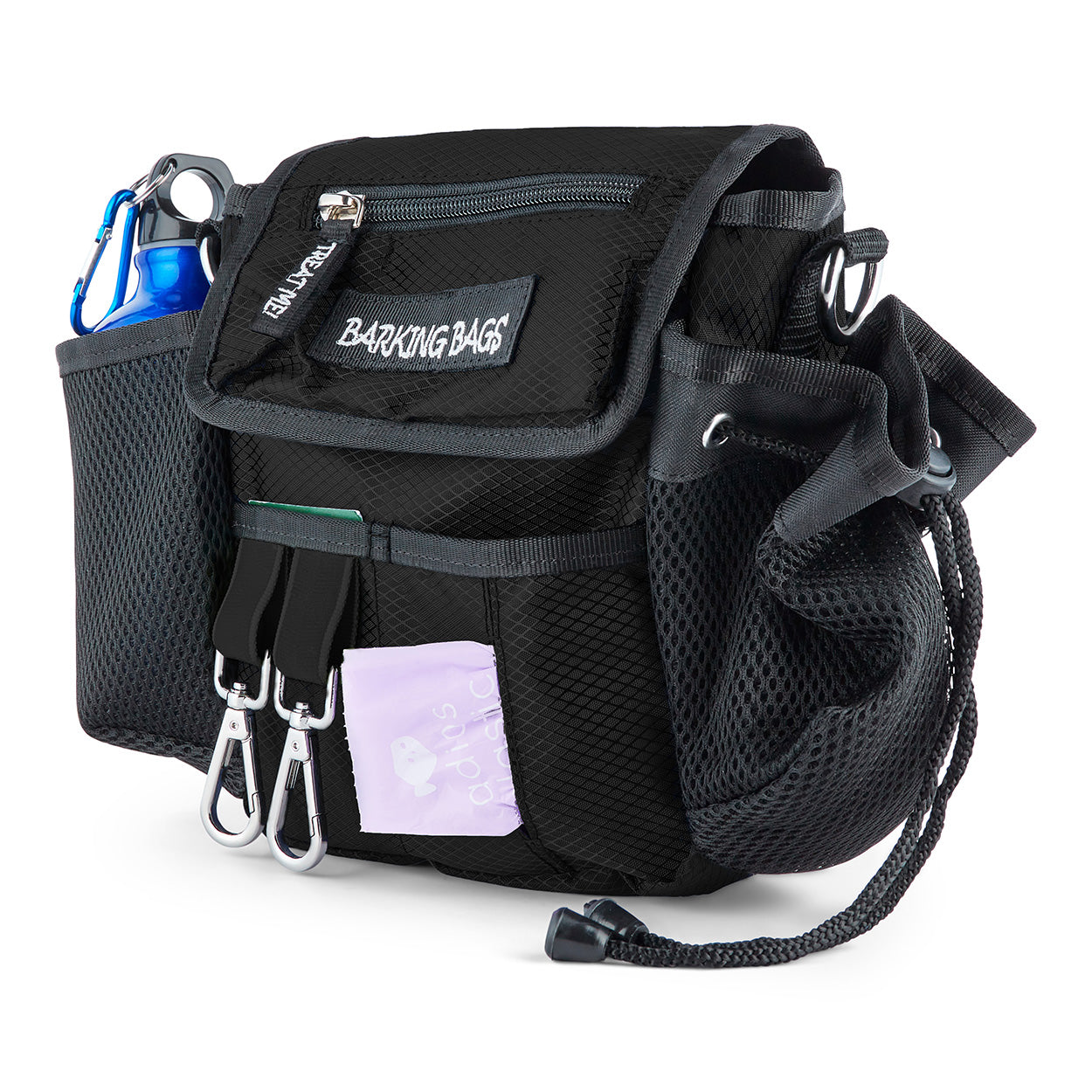
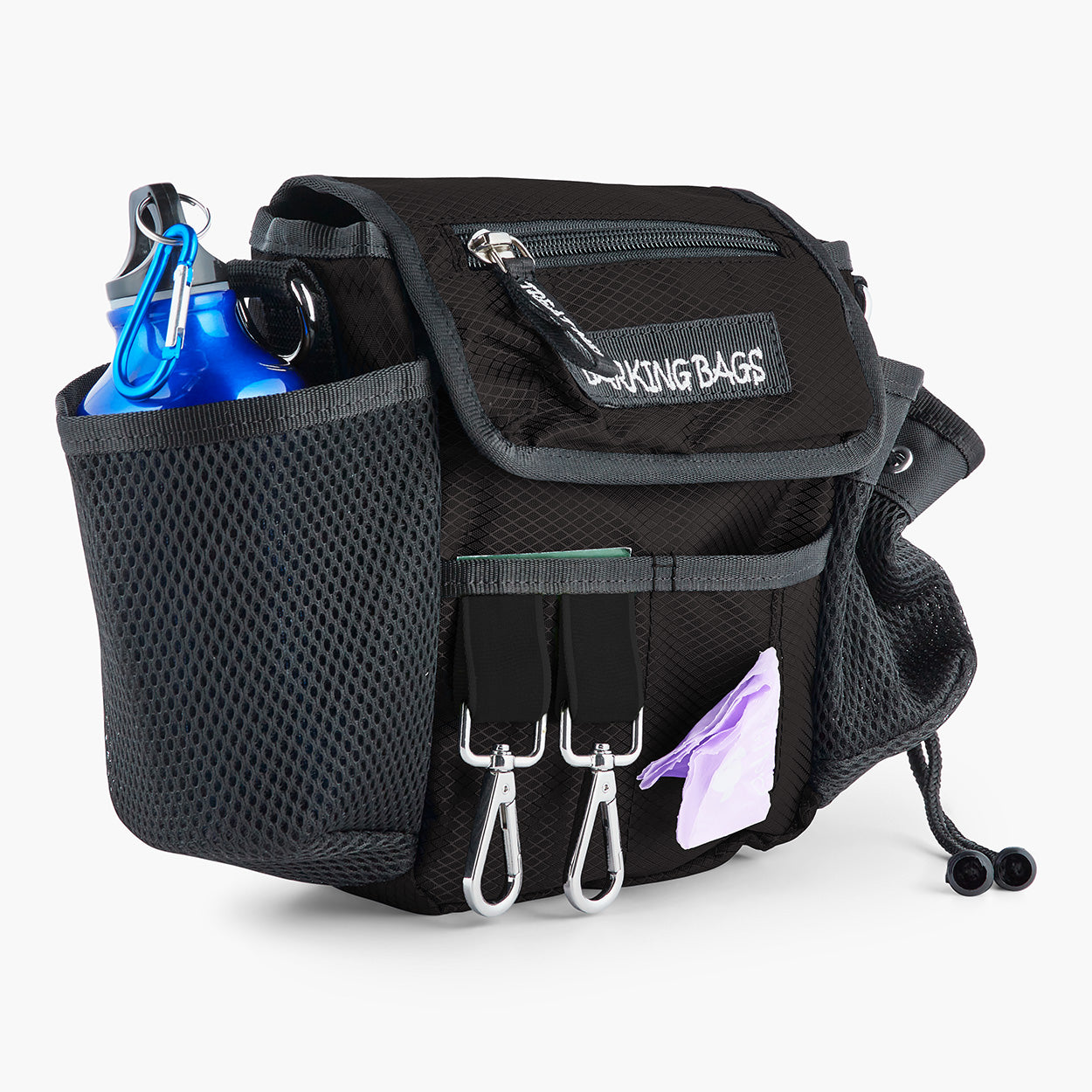
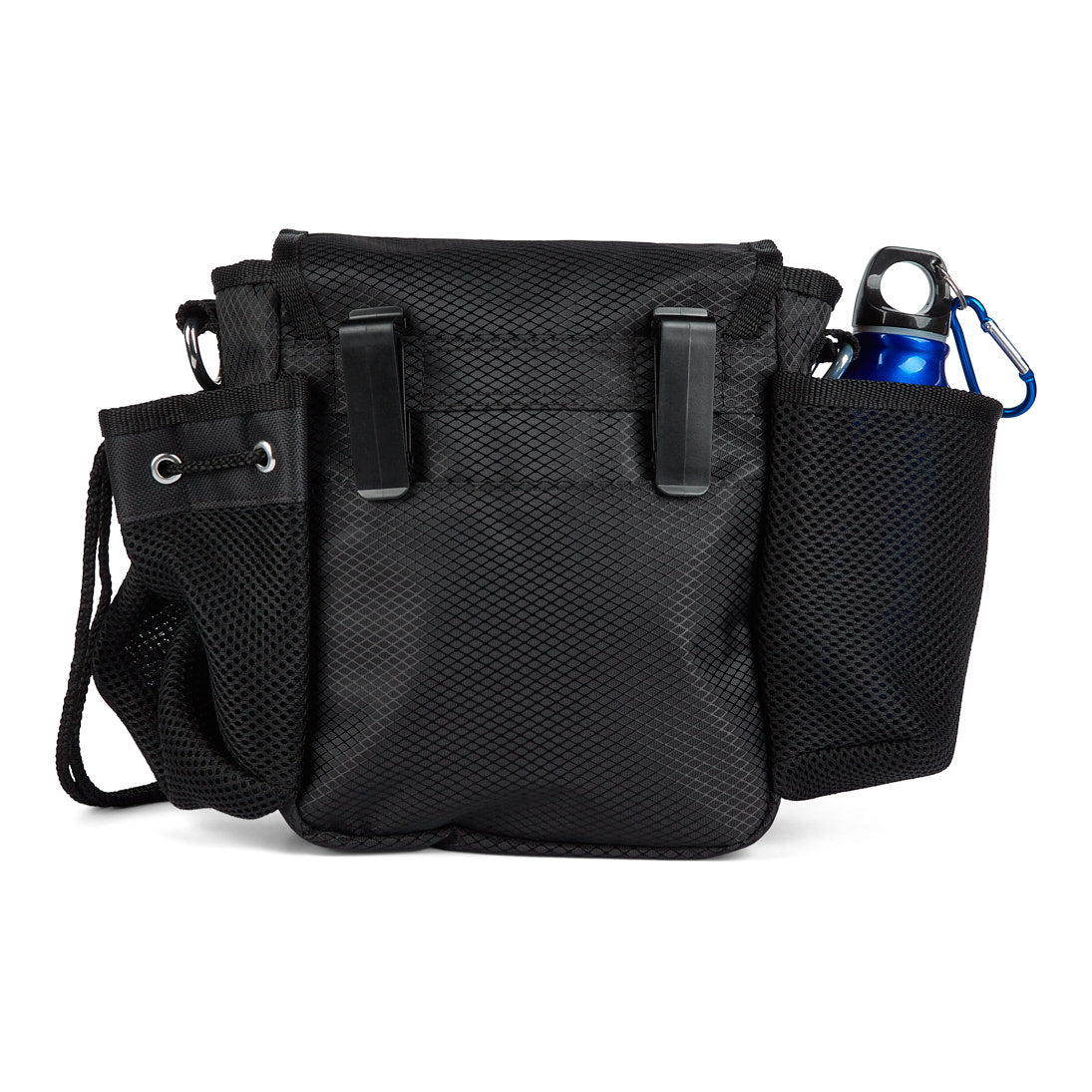
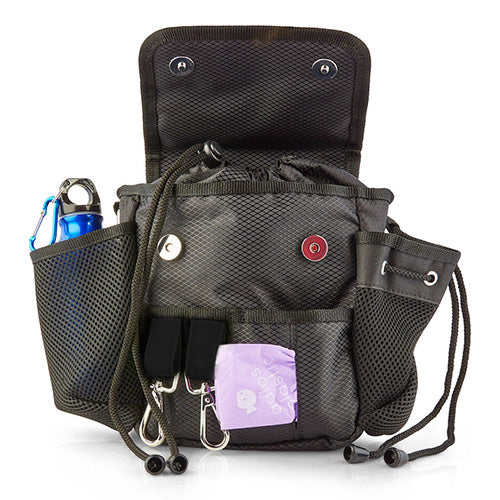
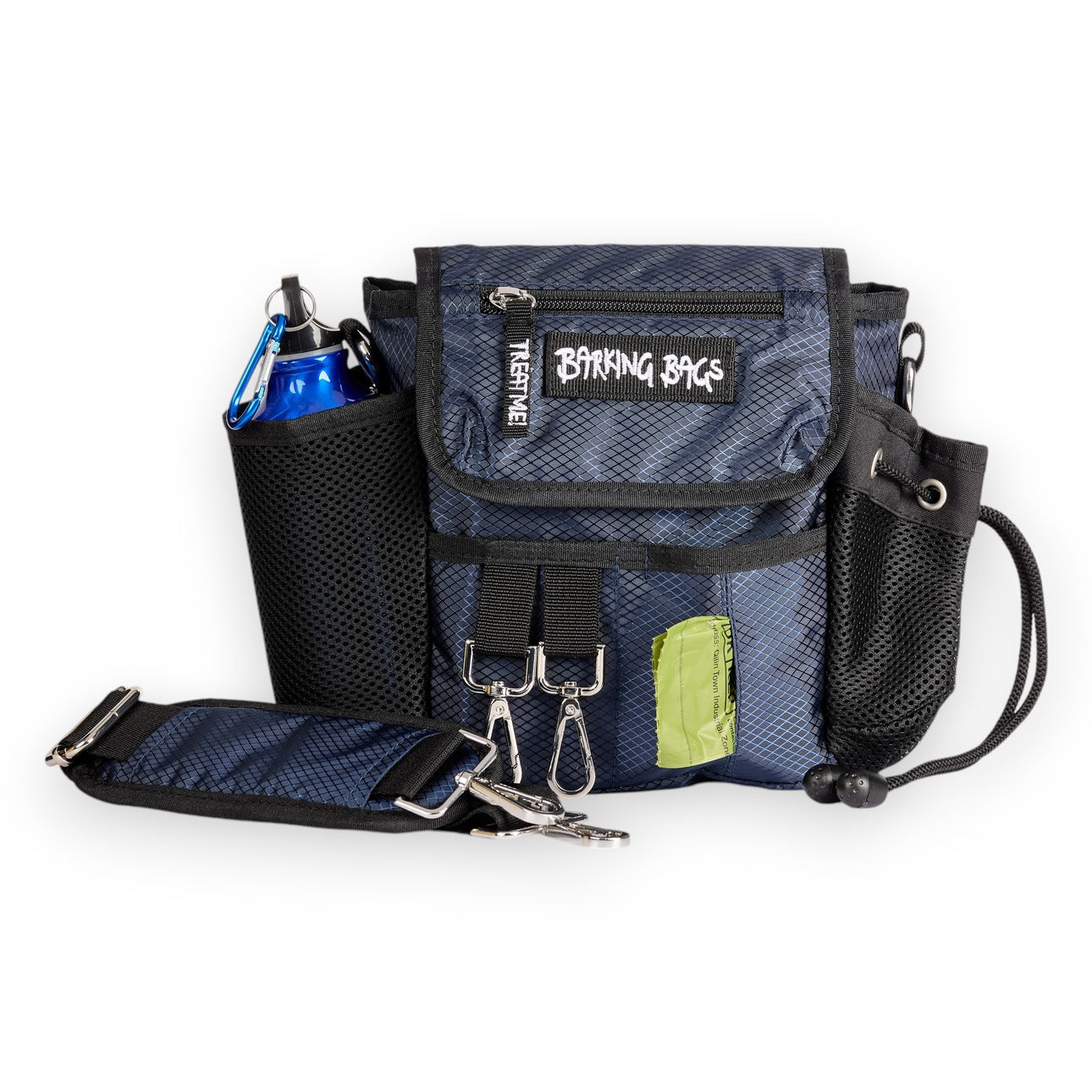
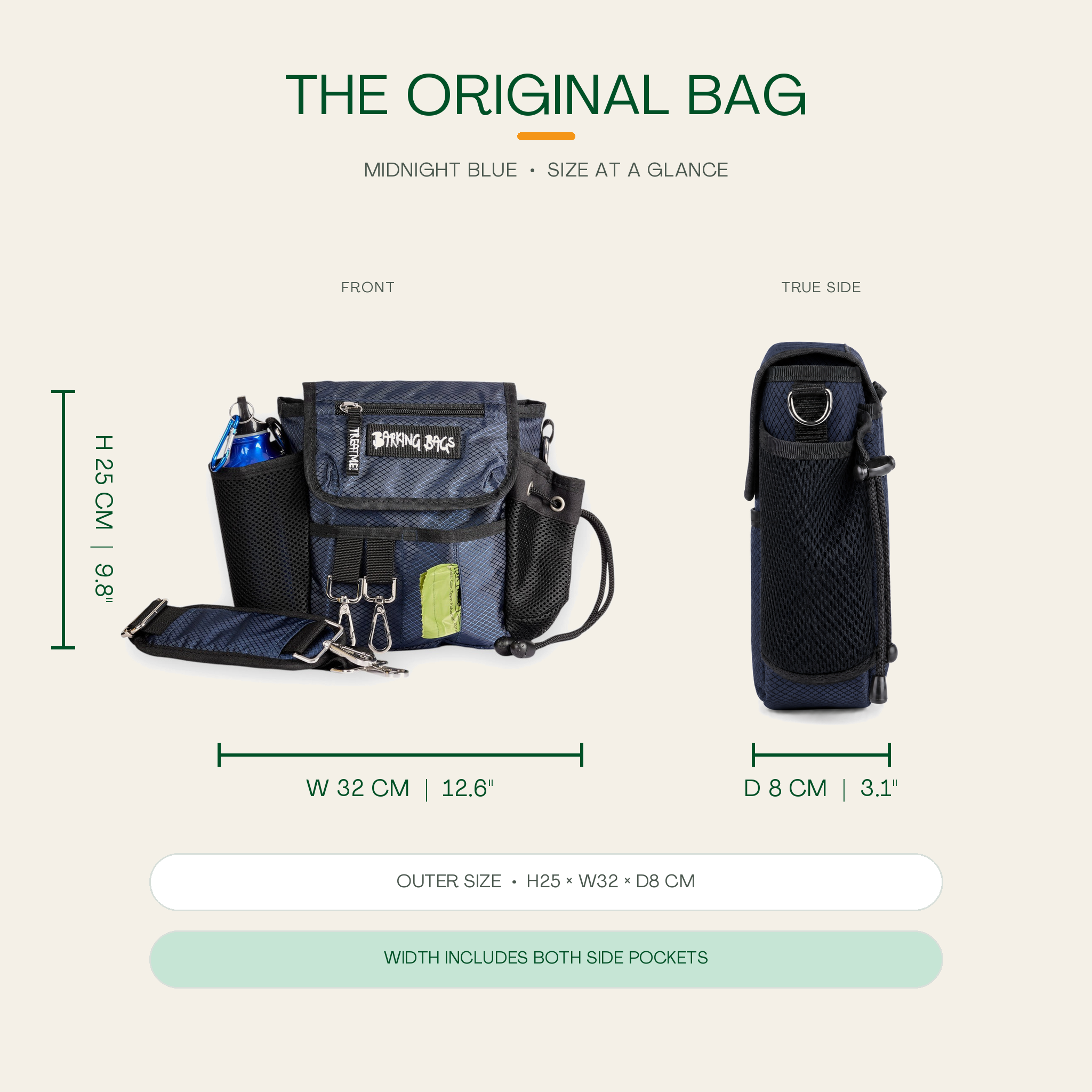
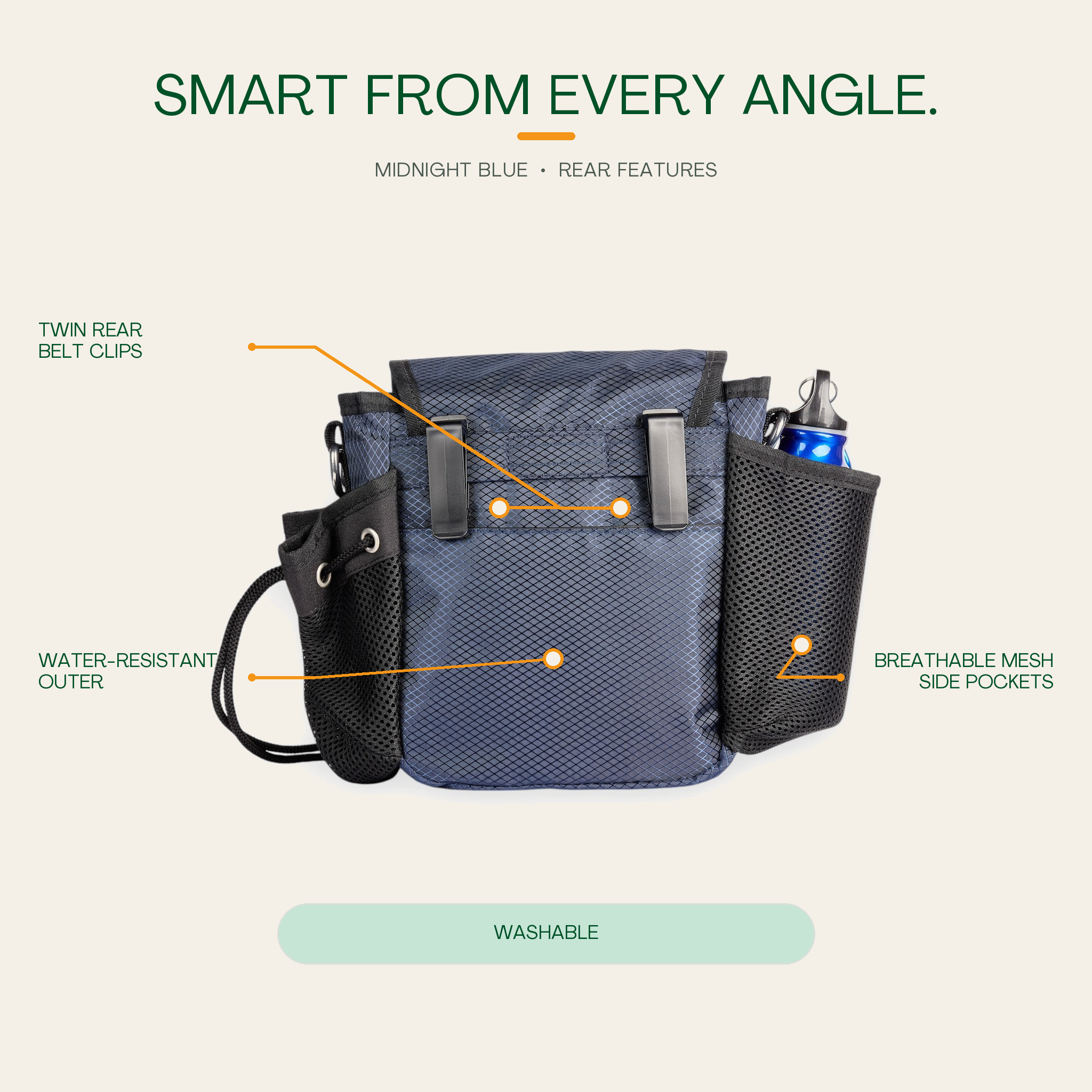
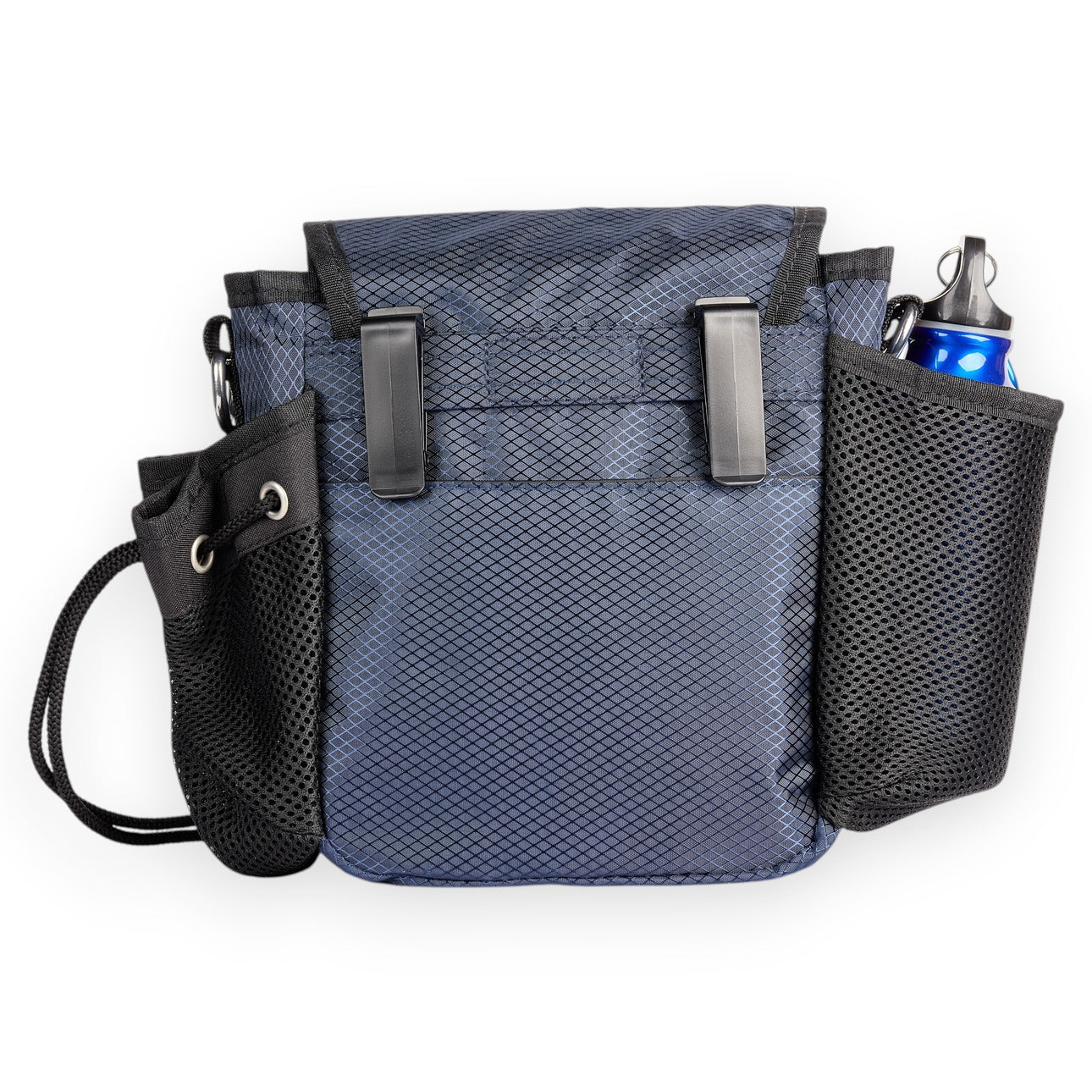
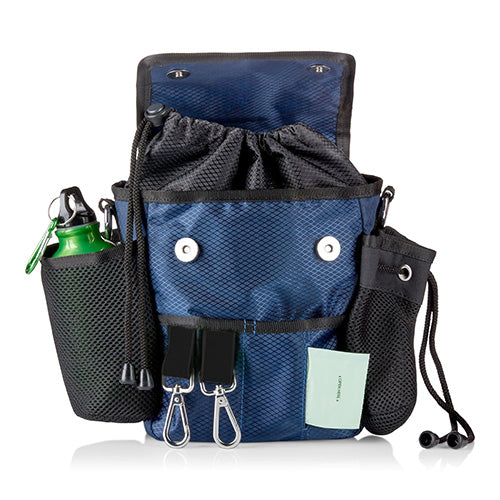
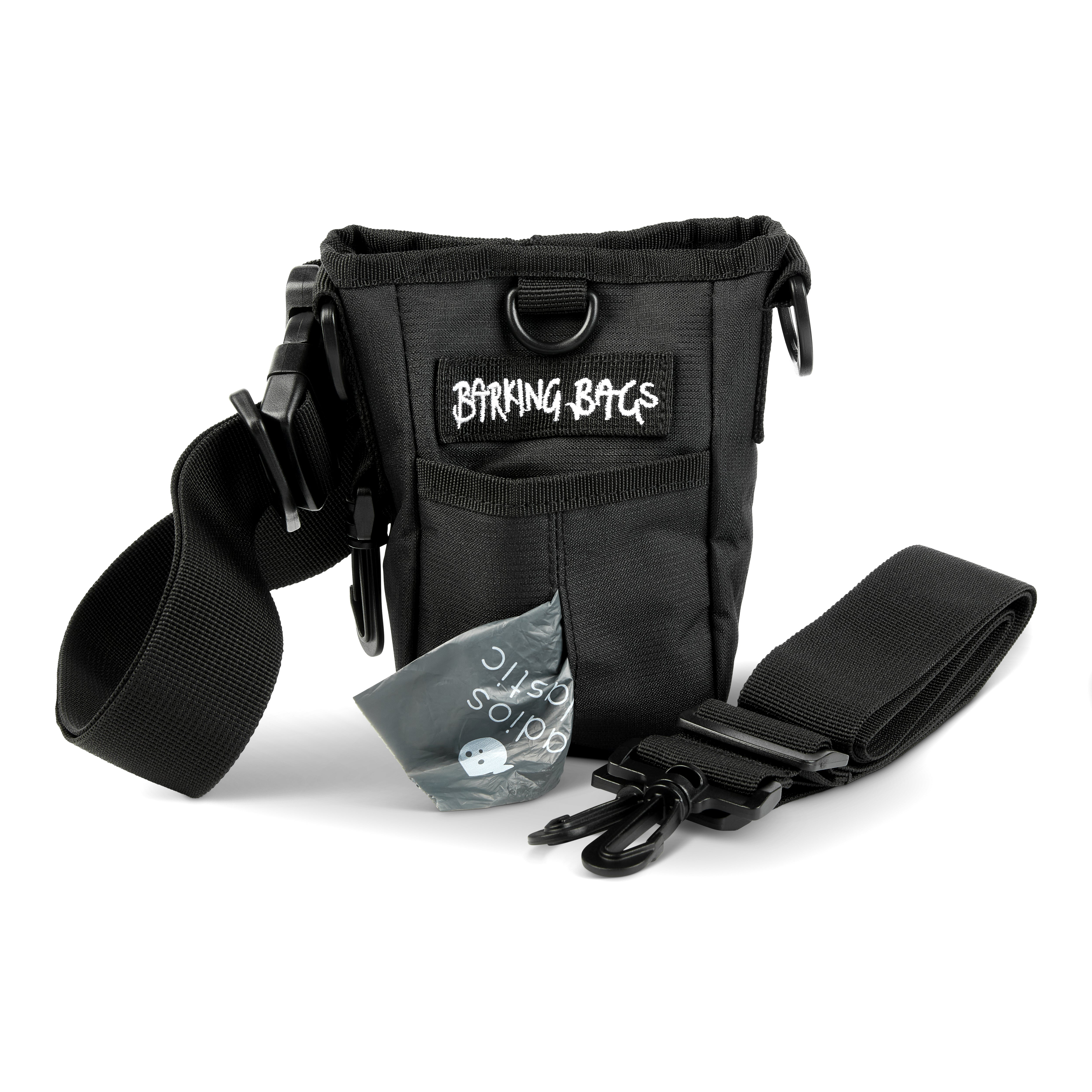
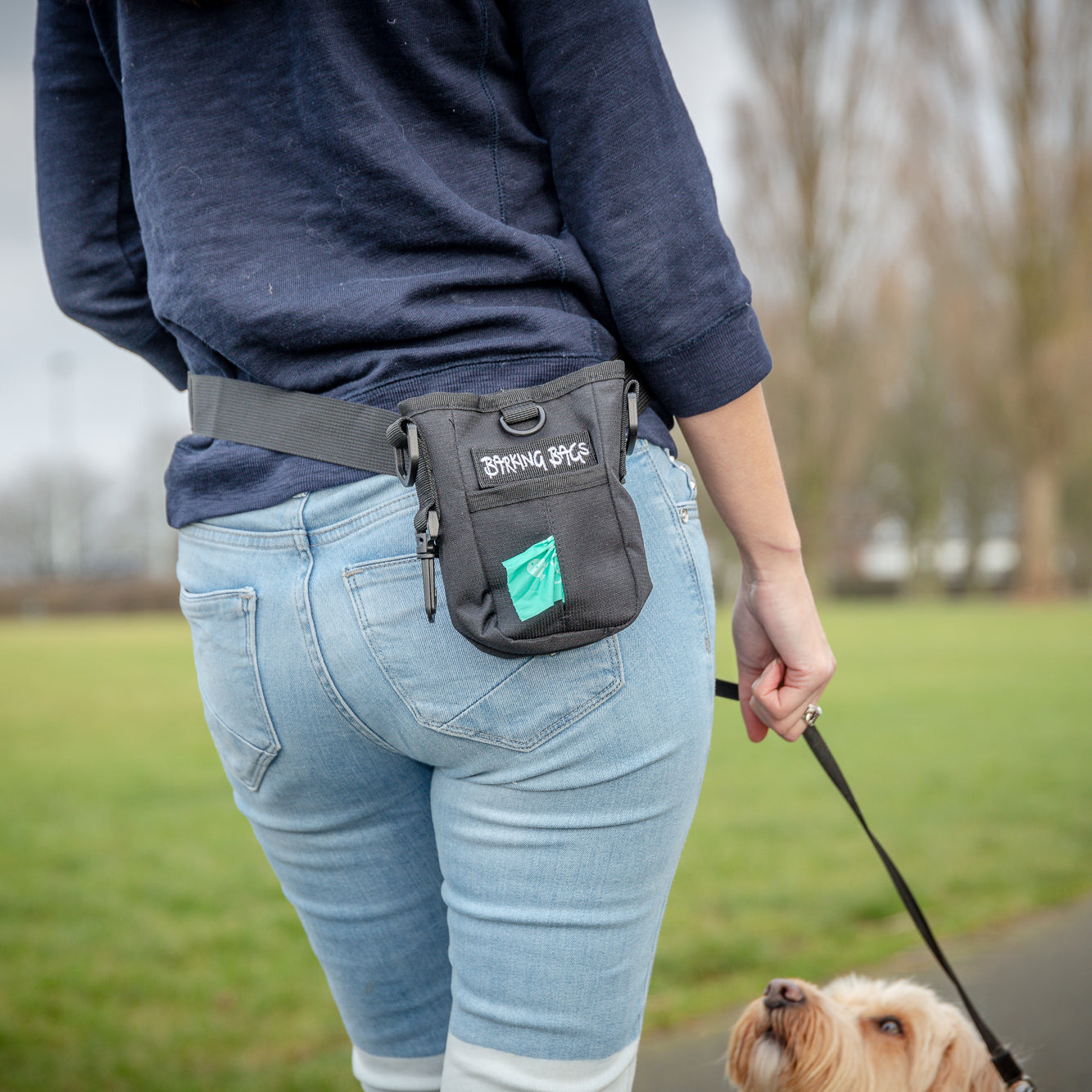
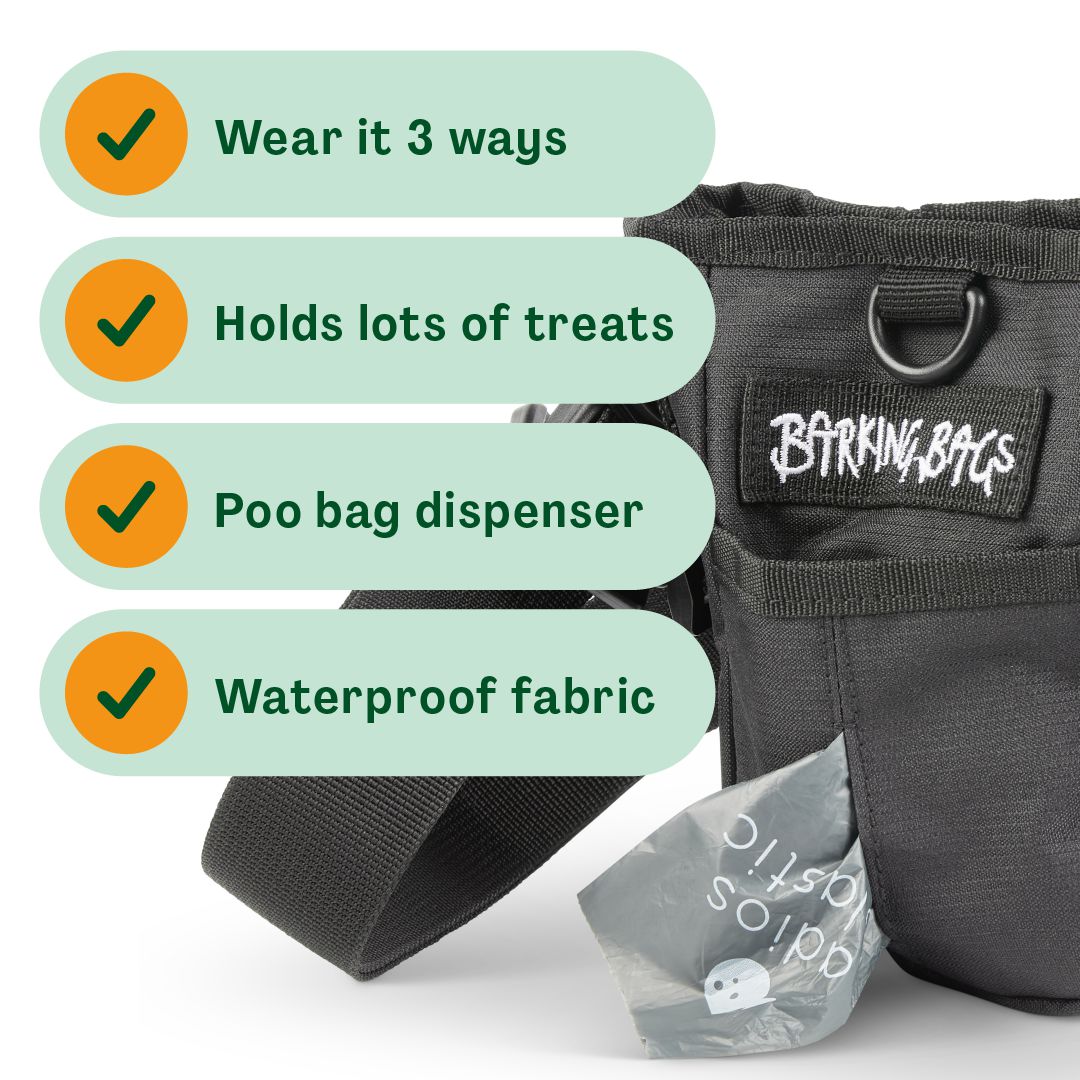
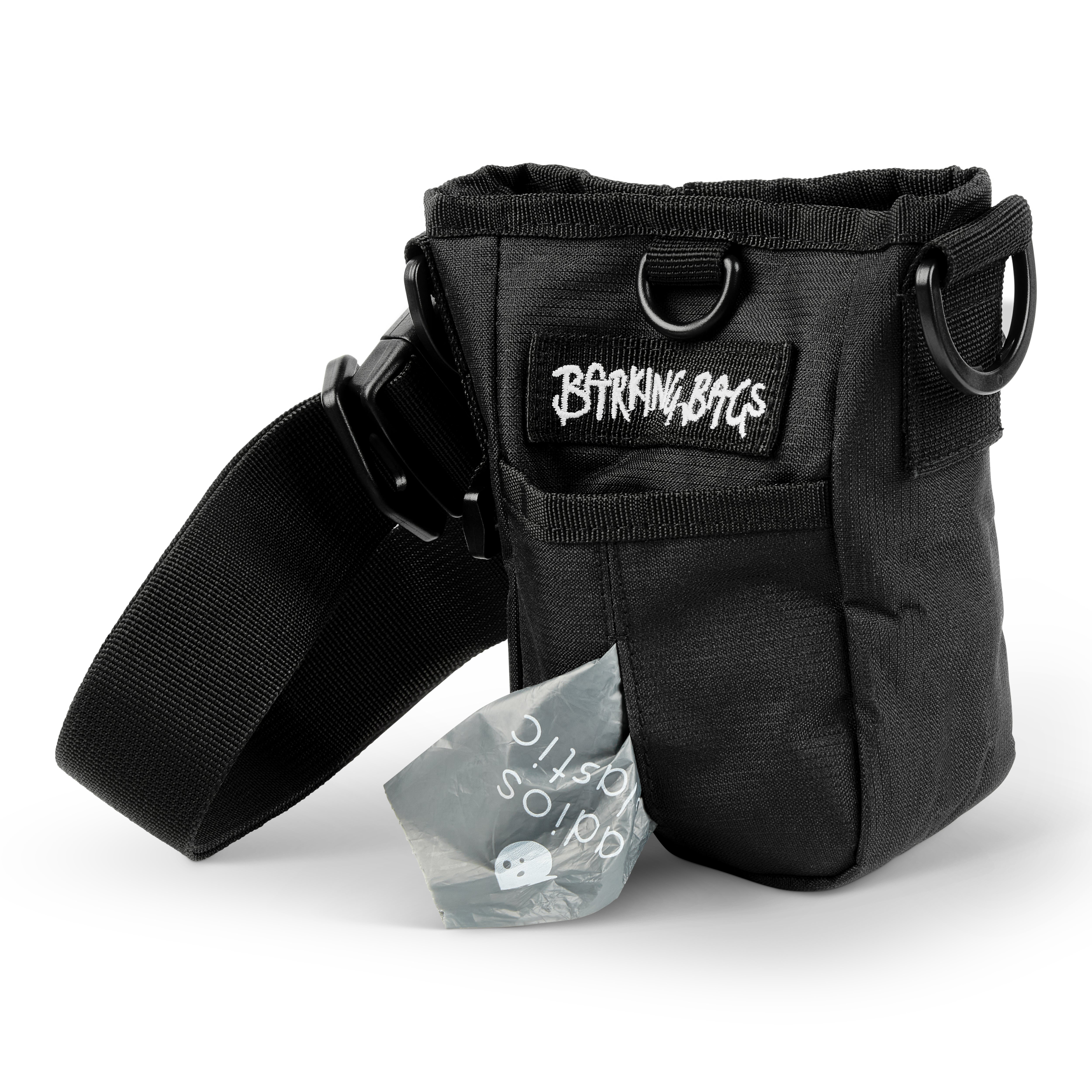
If you want the easiest fix, stop relying on your hands and standard clothing pockets. A dedicated dog walking bag is usually the most practical option because it gives your phone its own compartment while keeping the rest of your essentials organised too.
That matters because your phone is rarely the only item you are carrying. Most walks also involve keys, treats, poo bags, maybe a ball, perhaps some training gear, and often a few personal bits as well. Once all of that starts competing for space, improvised storage stops feeling clever and starts feeling annoying.
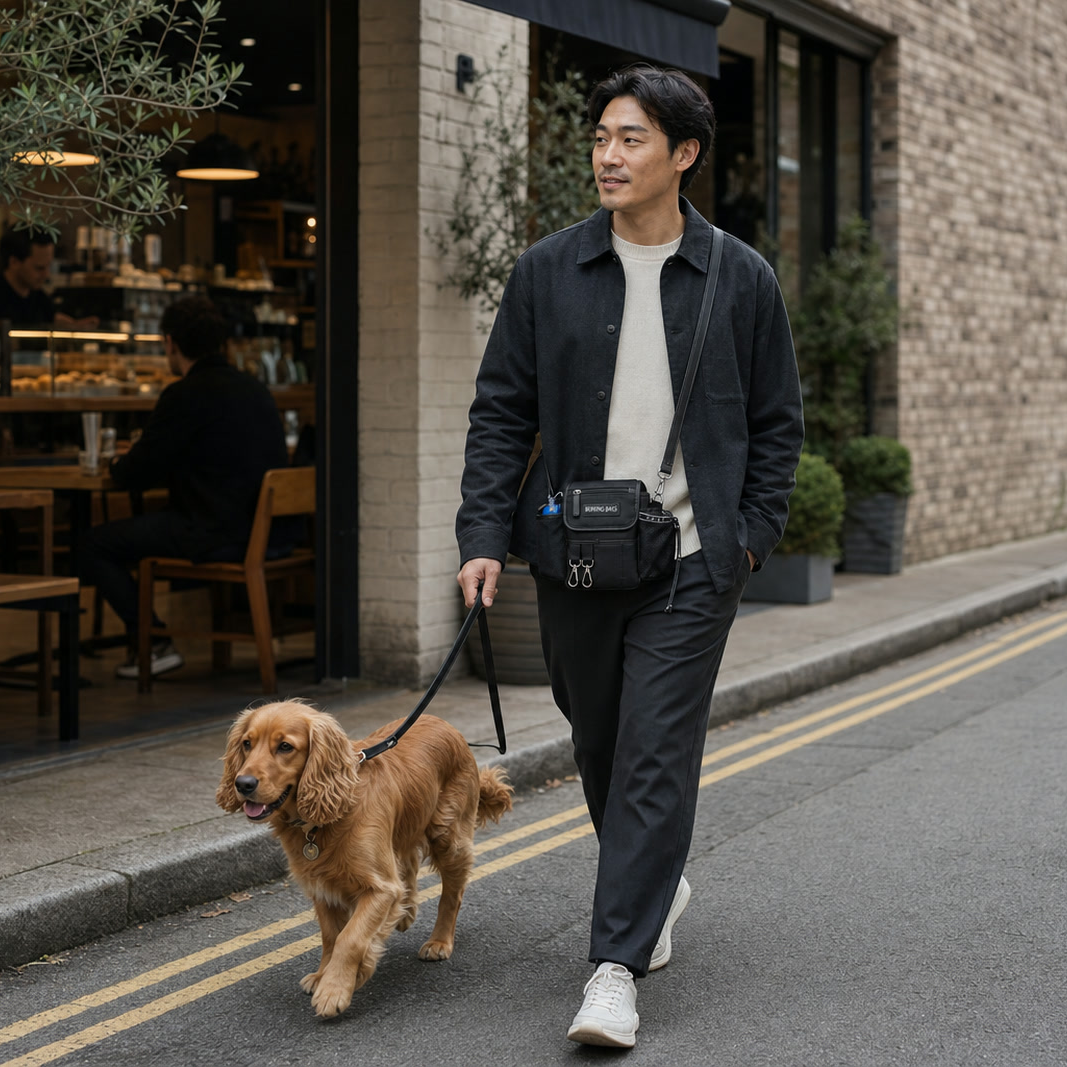
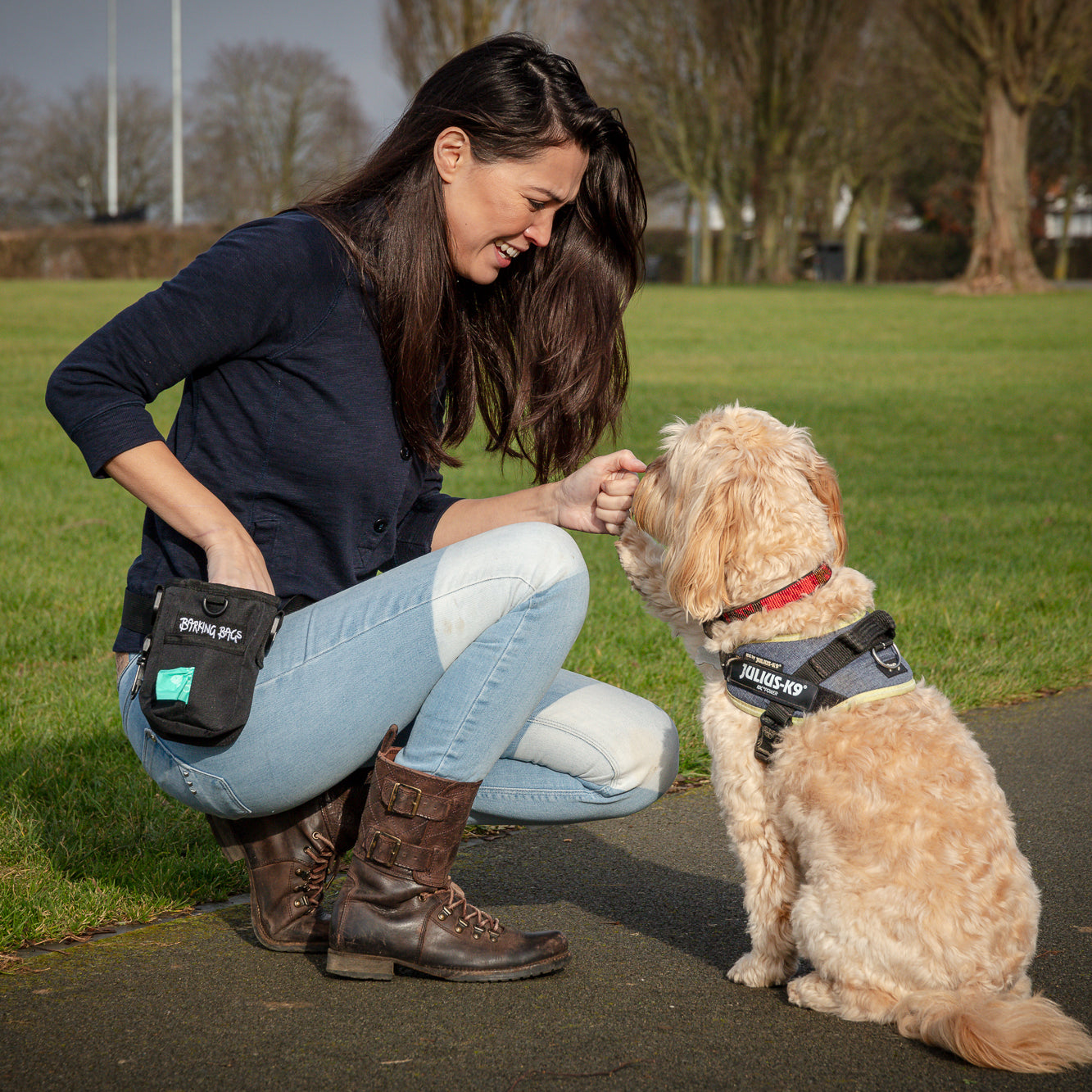
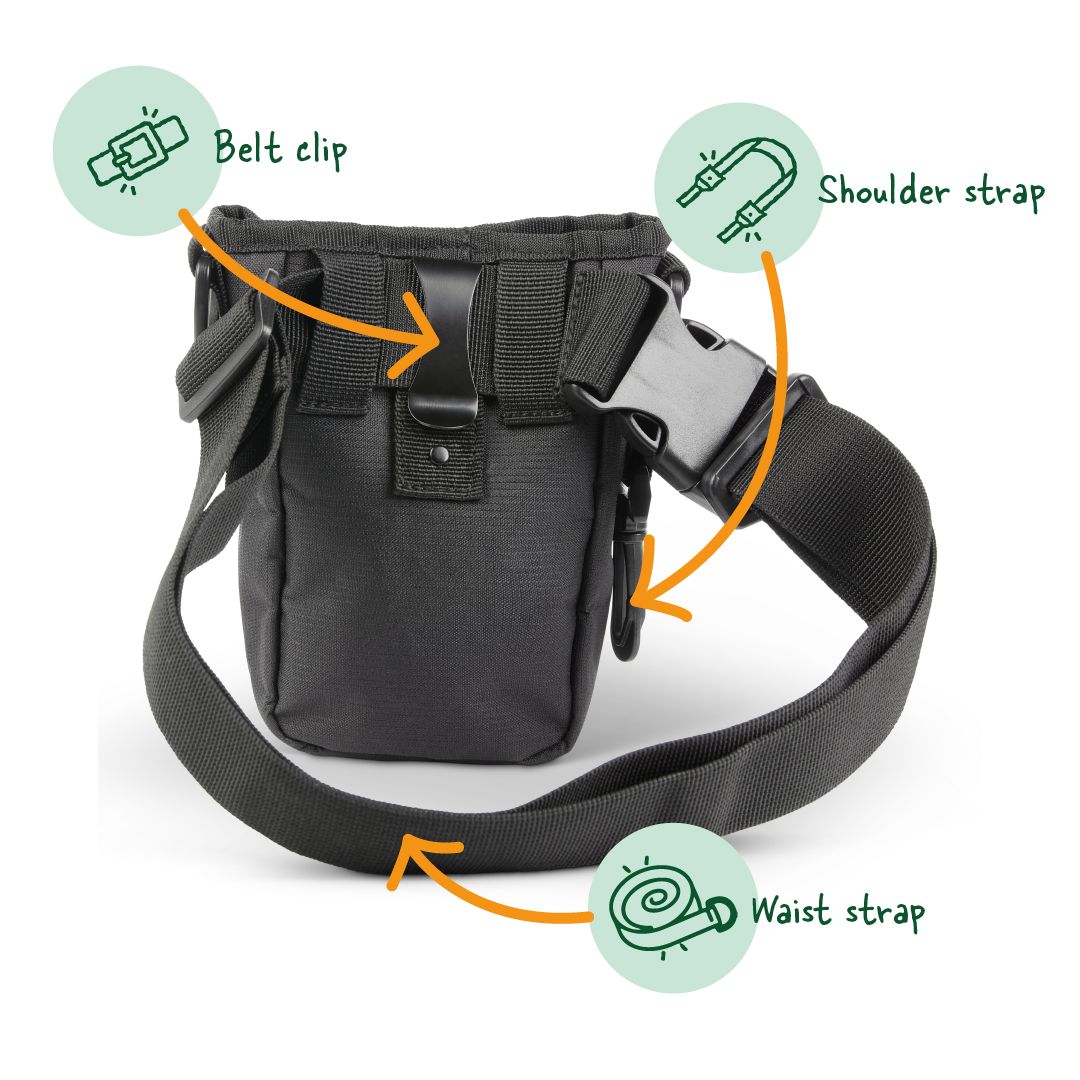
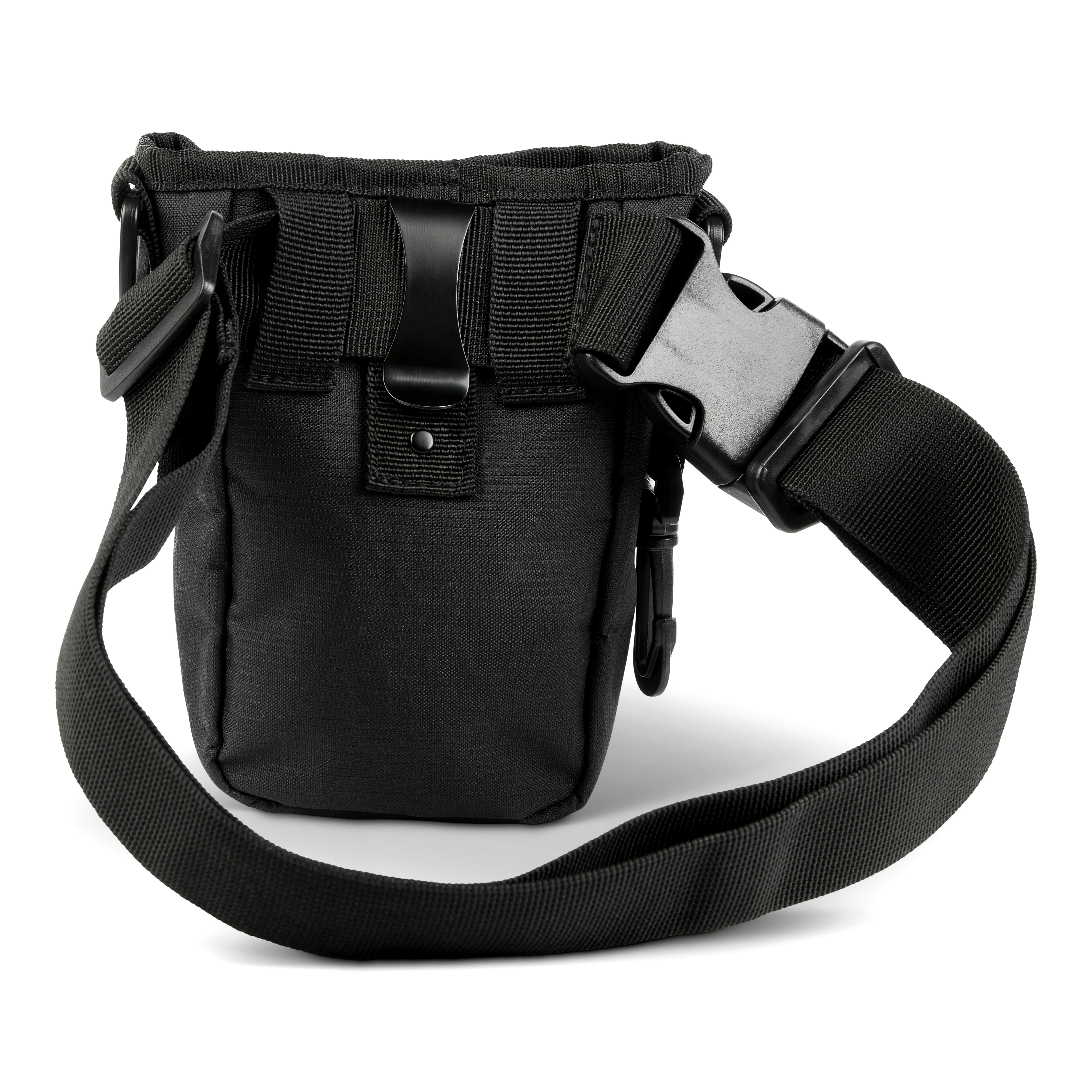
A well-designed crossbody or waist-style dog walking bag keeps the phone close to your body, which makes it more secure and more comfortable over longer walks. It also helps with balance. You are not constantly patting your pocket to check whether your mobile is still there, and you are not adjusting a slipping handbag every five minutes.
For regular walkers, trainers and professional dog walkers, this is usually the point where a purpose-built setup starts to make obvious sense. A proper dog walking bag is designed around the routine itself, not adapted from everyday fashion accessories that happen to zip up.
Pockets can work, but only up to a point
Coat pockets are fine on short walks in cooler weather, especially if they zip. But they become less useful in spring and summer, or when you switch outerwear. Trousers and leggings pockets can feel convenient at first, although bigger phones often bounce, pull at the fabric or sit awkwardly when you bend down.
There is also a comfort trade-off. If your phone is heavy and placed on one side of your body, you feel it over time, especially on longer routes. And if your dog is lively, anything loose in a pocket can quickly become distracting.
So yes, pockets can do the job occasionally. They are just not the most reliable long-term answer if you walk your dog daily.
The best ways to carry your phone on a dog walk
The right choice depends on how you walk, what else you carry and how much you want one item to do. Some people only need somewhere safe for a phone and keys. Others need a full system that works for training sessions, off-lead walks or multiple dogs.
Dog walking bag
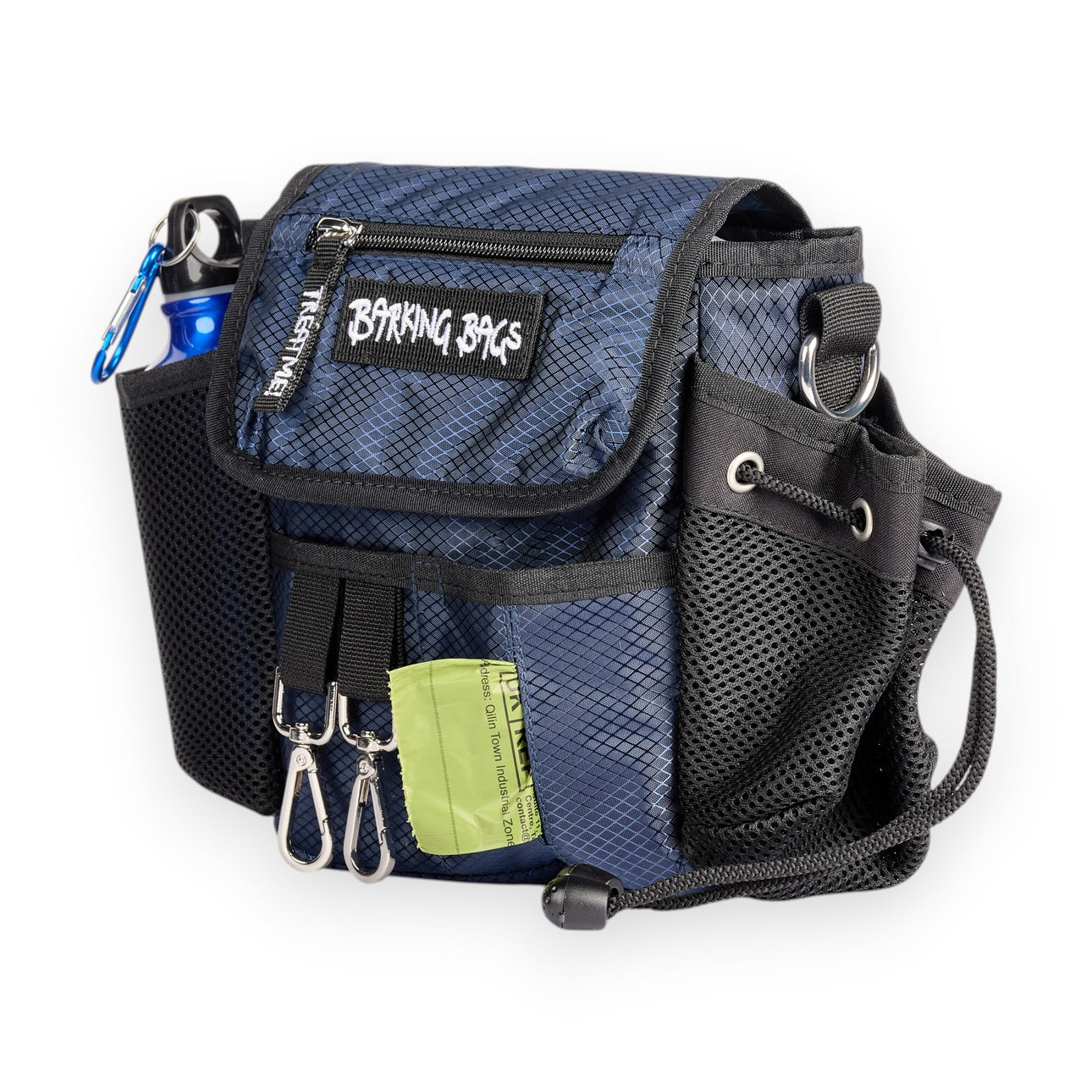
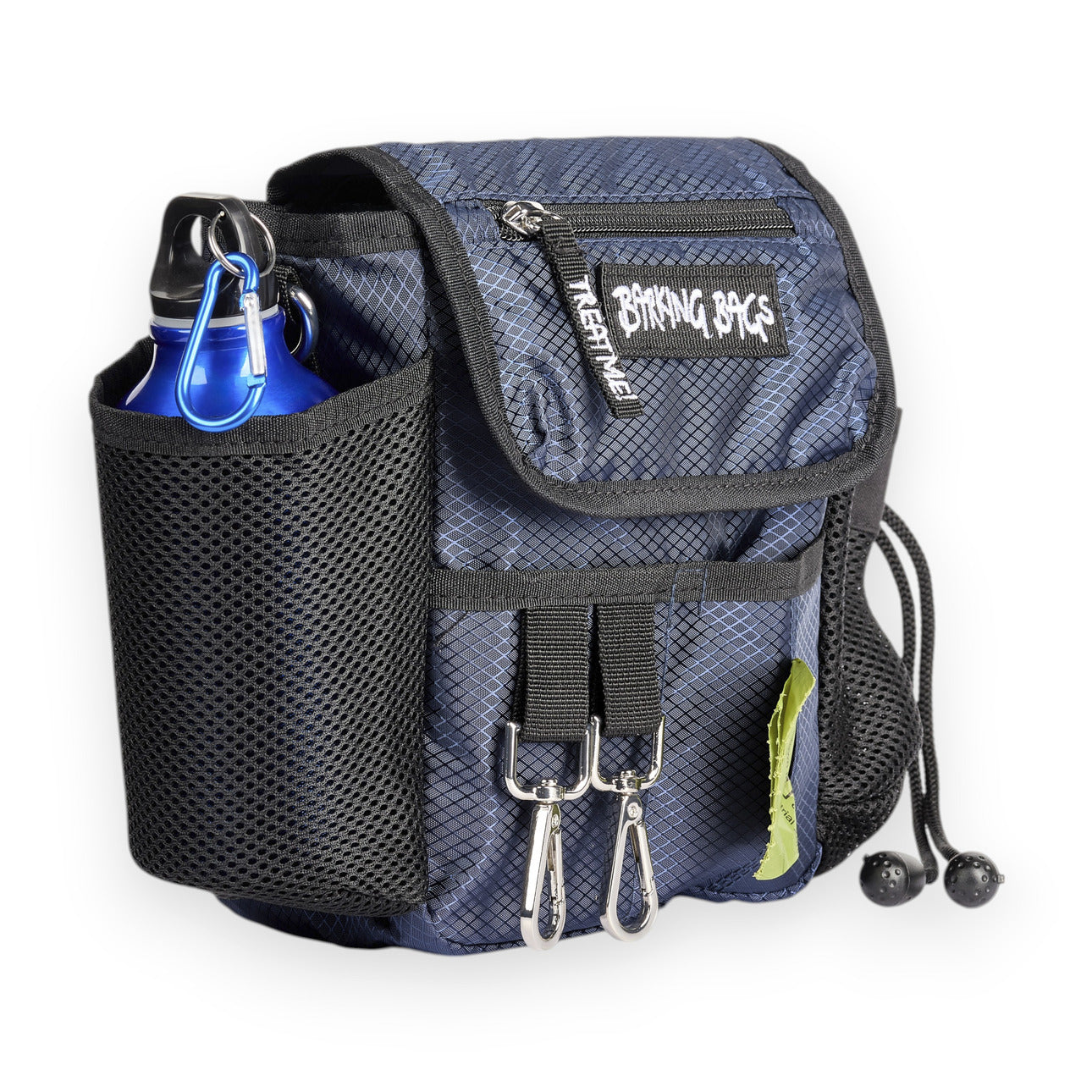
This is the most versatile option for most owners. A dedicated dog walking bag gives your phone a secure place while also making room for the rest of your kit. That means less rummaging, fewer overstuffed coat pockets and a much cleaner routine.
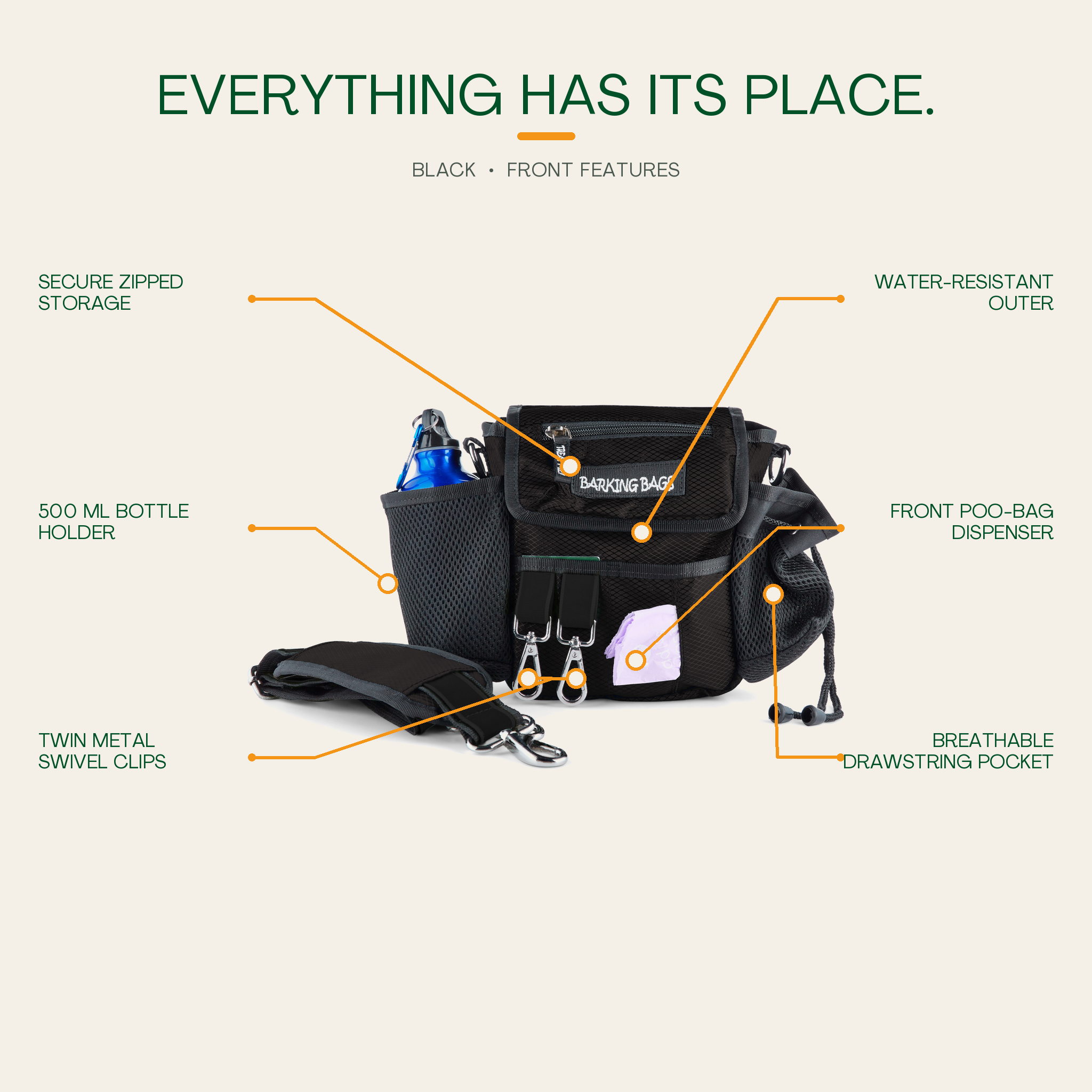
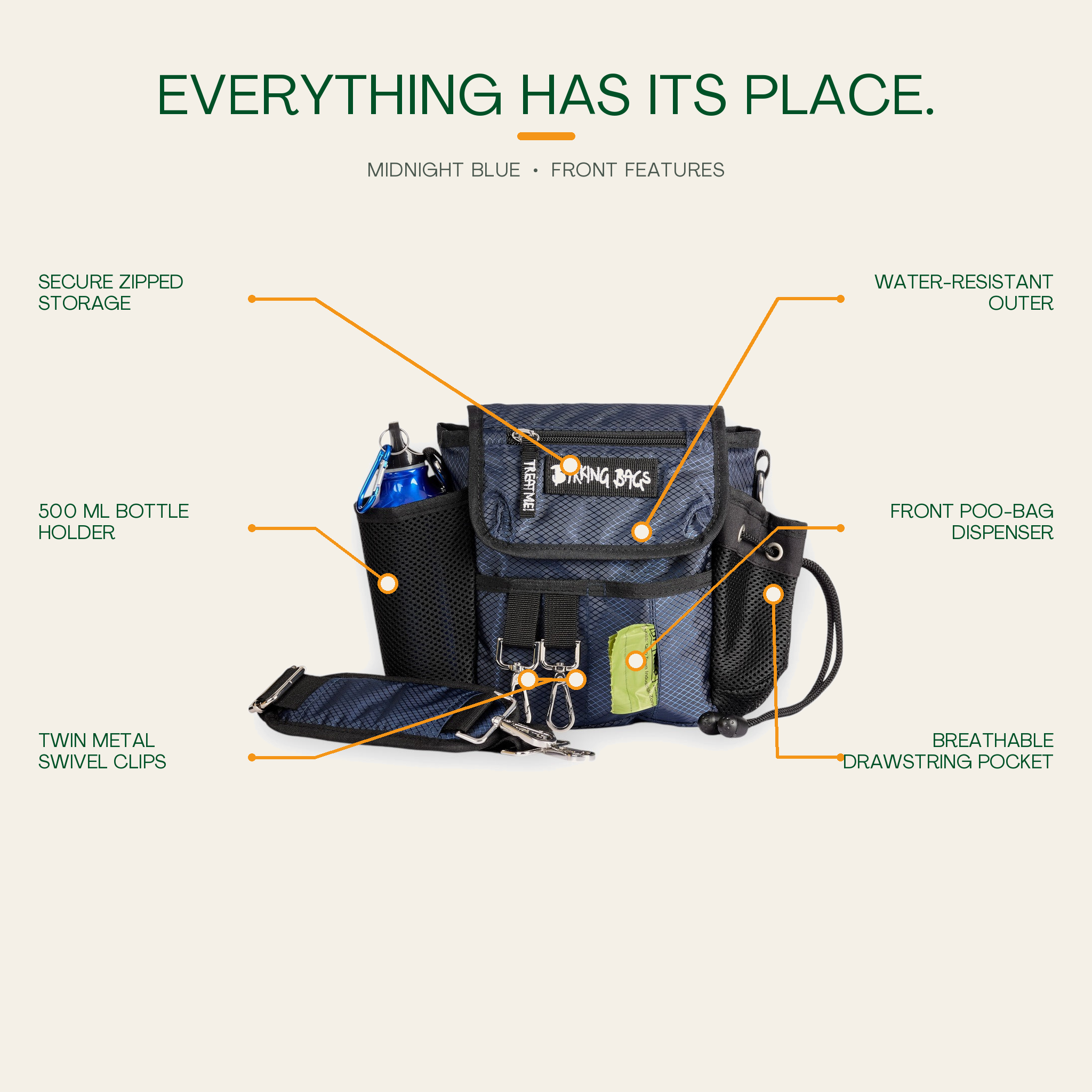
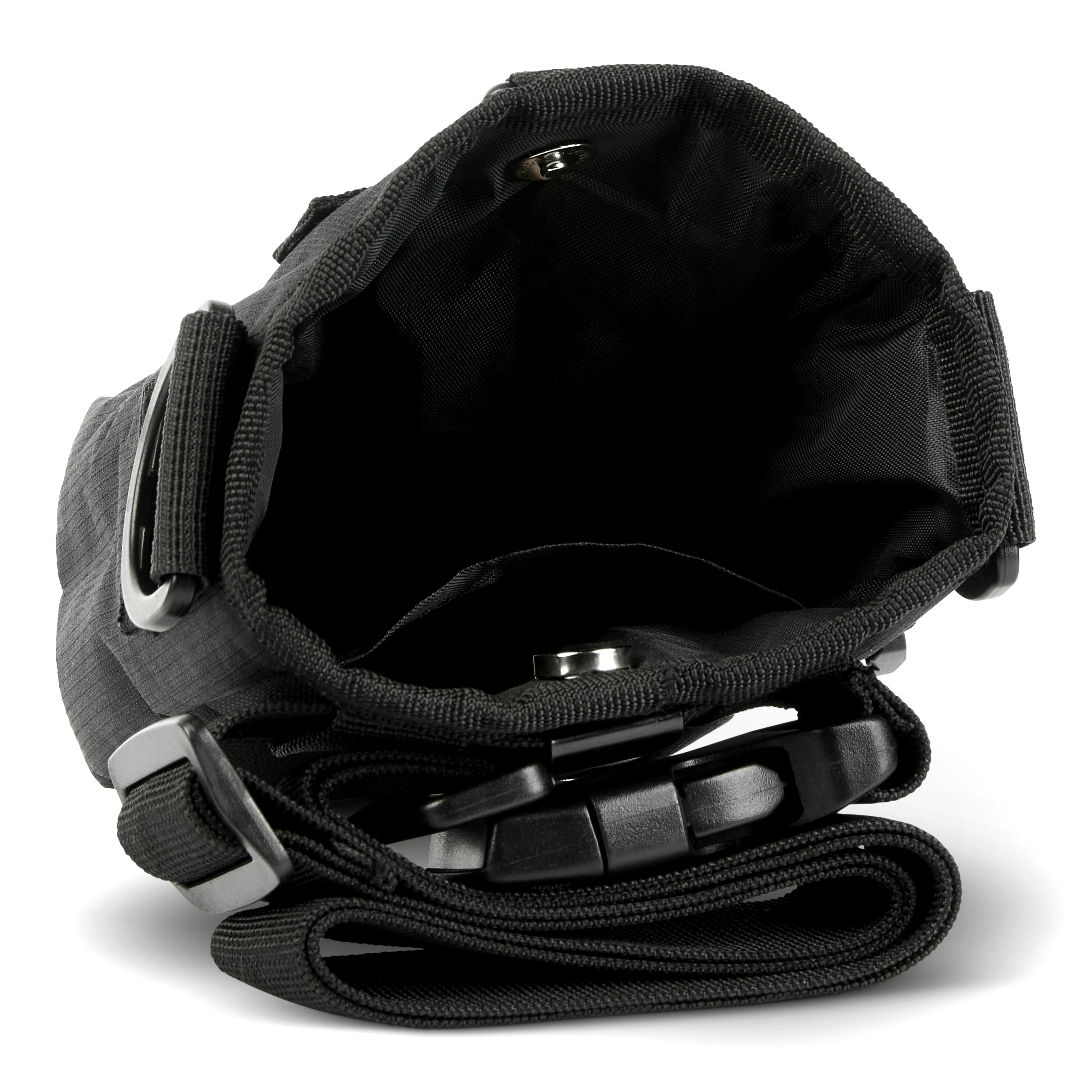
The real advantage is organisation. If your phone has its own section, it stays protected from crumbs, moisture and dog walking chaos. You can reach for it quickly, but it is not in the way when you need treats or poo bags. That separation is what makes a specialist bag feel different from using any old handbag.
Crossbody bag
A simple crossbody style works well if you like having your essentials within easy reach. It spreads weight more comfortably than carrying something on one shoulder and tends to stay put better when you are moving around.
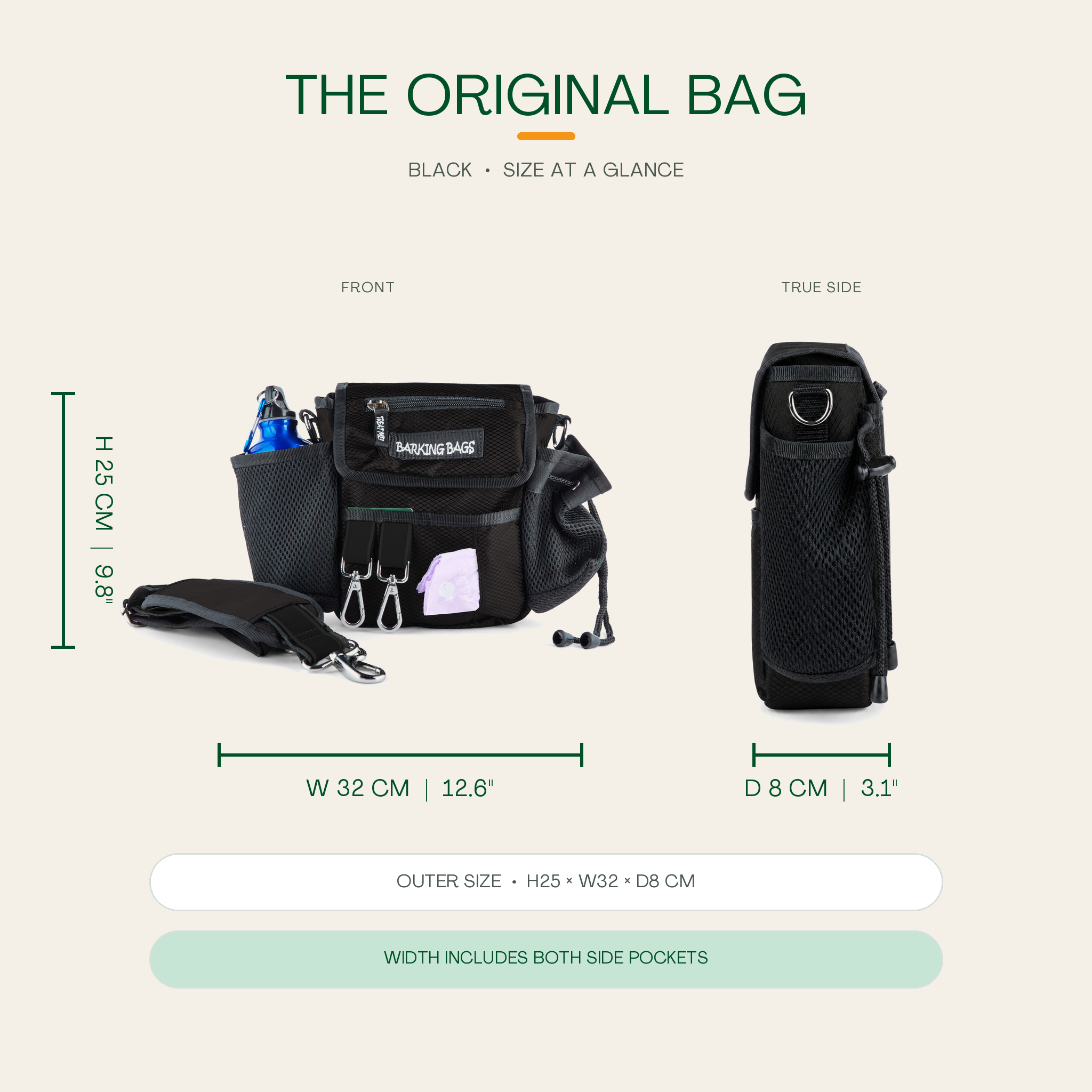
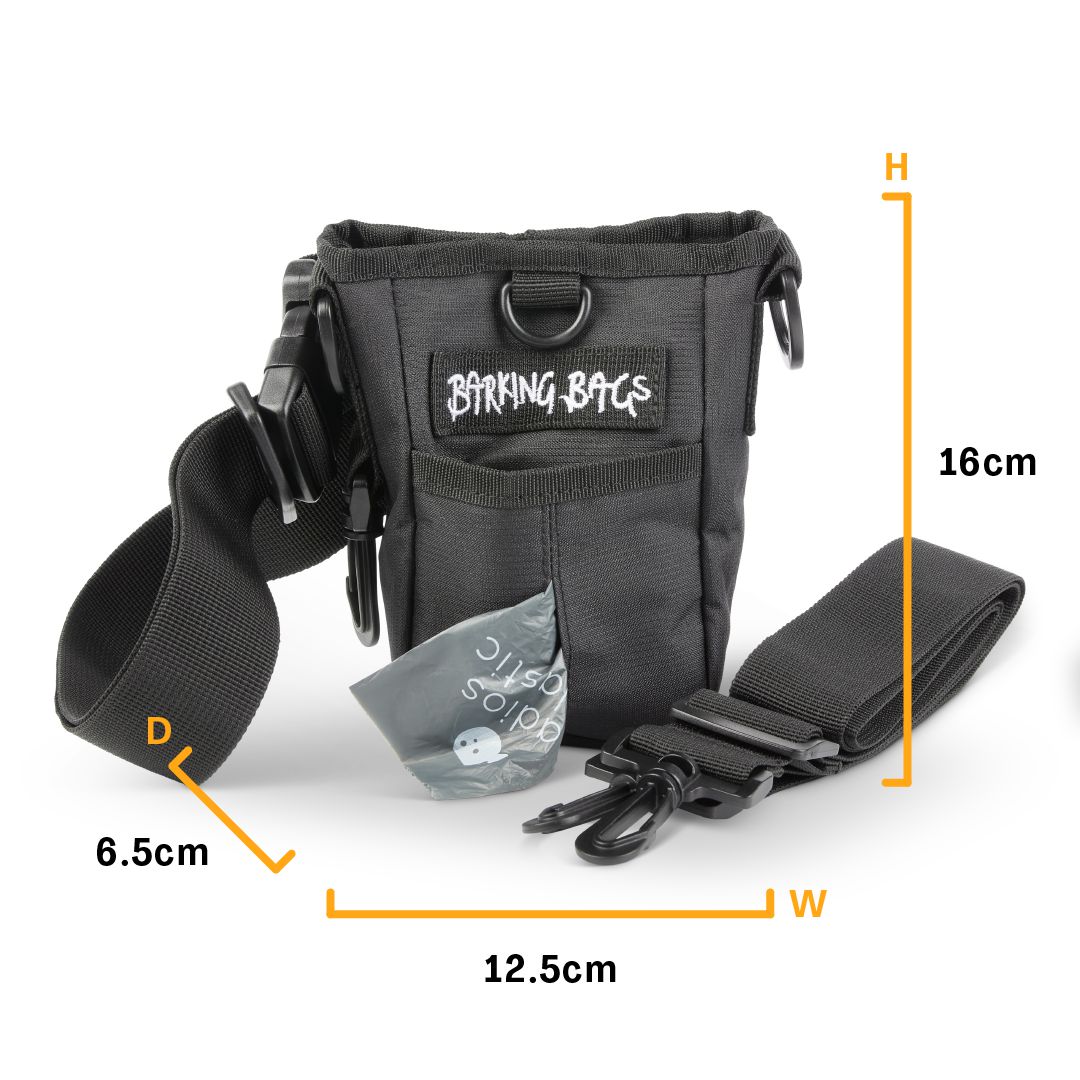
For dog walks, the key is fit. Too small, and you are cramming everything in around your phone. Too large, and the bag swings about or feels bulky. The sweet spot is enough space for daily essentials without turning every walk into a packing exercise.
Belt bag or waist bag
A belt bag can be a good option for shorter walks, training sessions or owners who want a more compact setup. It keeps your phone close and leaves your upper body free, which some people prefer.
That said, it depends on what else you need to carry. If you are taking a long lead, treats, water or accessories, a very small waist bag can run out of space quickly. It can also feel less comfortable over thicker coats in winter.
Phone armband
An armband is more useful for walks that are really runs. If you are jogging with your dog and only need your phone, it can work well enough. For a normal dog walk, though, it tends to be less practical. Access is slower, storage is limited and it does nothing for the rest of your dog walking essentials.
That is the main trade-off. It solves the phone problem but not the walk problem.
What to look for if you want a better setup
If your goal is to make walks easier, not just move your phone from one awkward place to another, there are a few details worth paying attention to.
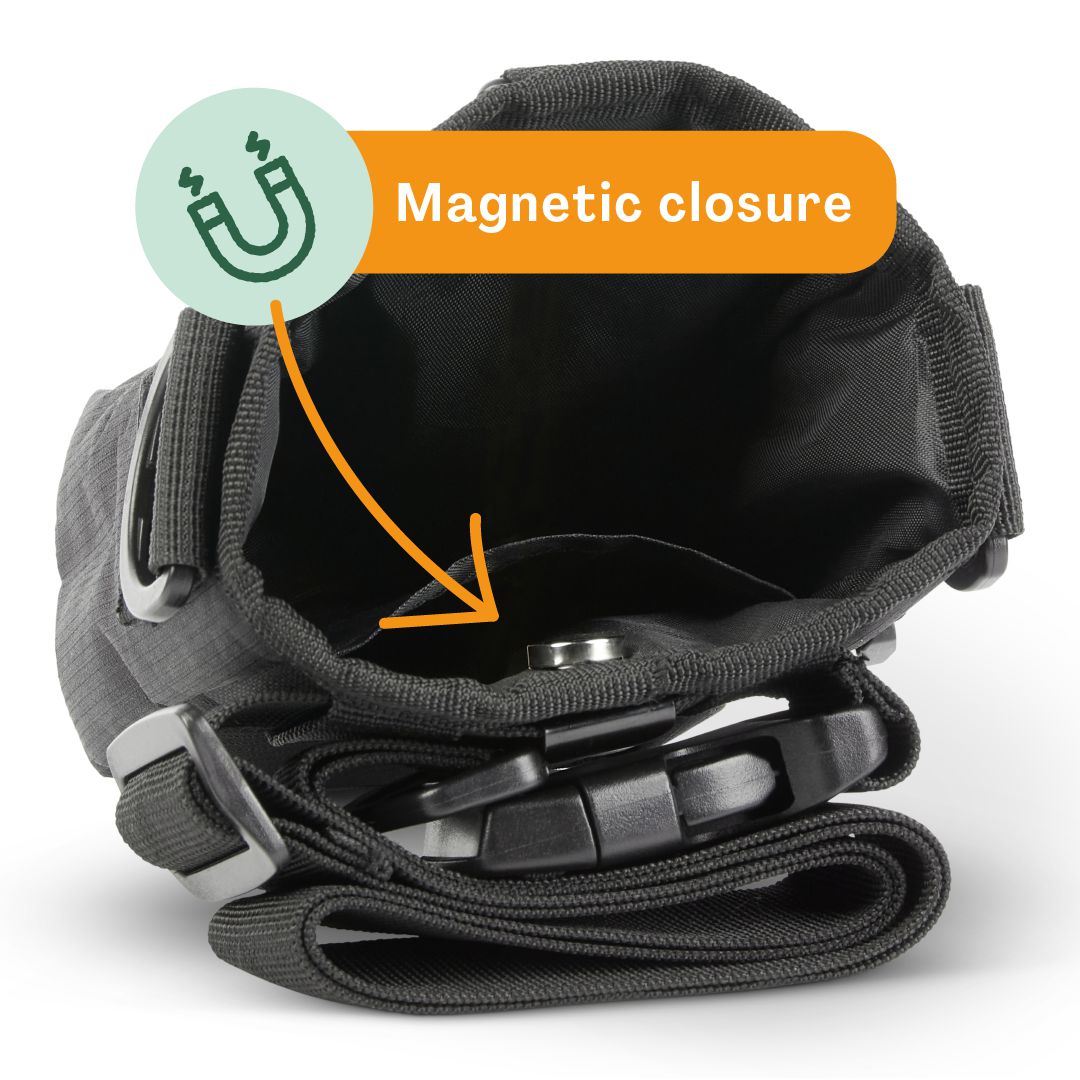
A secure zip matters. Dog walks involve bending, reaching, crouching and the occasional sudden sprint. An open-top pocket might seem quicker, but it is far less reassuring when your dog spots another dog across the park.
Easy access matters too. Your phone should be simple to grab without unpacking half your bag. That is particularly useful if you use it for route tracking, photos or emergency calls.
Separate compartments make a bigger difference than many owners expect. A phone should not be rolling around with treats, keys and used poo bags. Good organisation is not about carrying more stuff. It is about finding what you need quickly and keeping clean items away from messy ones.
Comfort is another big one. A bag can look great online and still be irritating after twenty minutes if the strap digs in, the shape is bulky or the weight distribution is off. Daily-use accessories need to earn their place by being easy to wear again and again.
And then there is style. Practical does not have to mean clunky or overly sporty. If you are walking your dog twice a day, your bag becomes part of your routine and part of what you wear. It should feel useful, but still look good.
Common mistakes dog owners make
The biggest one is assuming a normal handbag will do the same job. Sometimes it will, but often it is too open, too deep, or too fiddly when you need one-handed access. Dog walks are repetitive and physical. Bags that work for shopping or commuting do not always suit that rhythm.
Another mistake is underestimating how much your phone gets used. If you regularly check messages, take photos, use maps or keep emergency contacts handy, your phone deserves more than a cramped side pocket.
The last one is focusing only on storage capacity. Bigger is not always better. If a bag is oversized for your usual routine, it can feel heavy and disorganised. The best option is the one that fits your actual walk, not your worst-case packing list.
A smarter answer to how to carry a phone on dog walks
If your current system involves swapping pockets, carrying your phone in your hand or throwing everything into a bag that is not built for the job, there is a better way. The easiest dog walks tend to happen when every essential has a place and your phone is one of them.
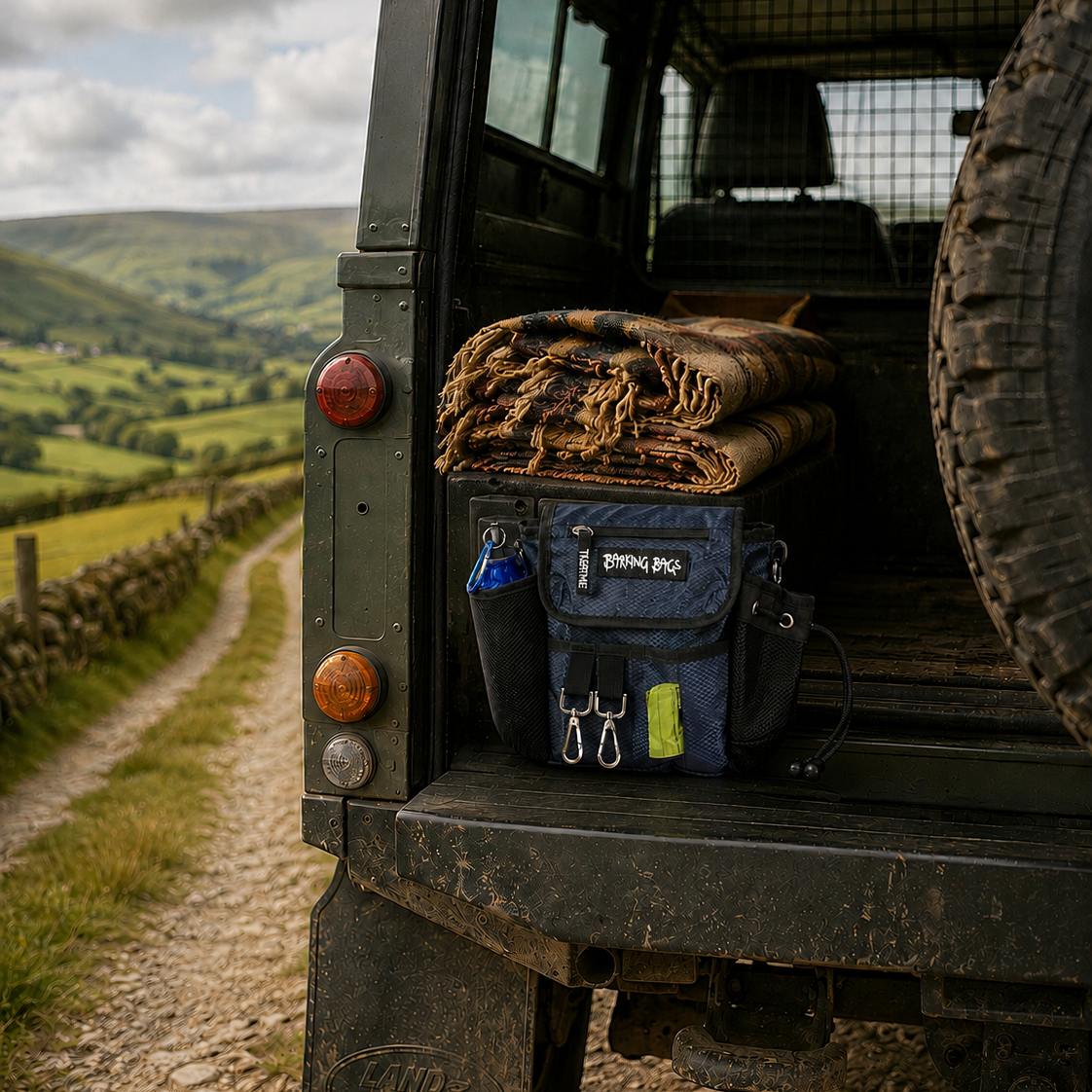
That is why purpose-designed options have become such a staple for regular walkers. At Barking Bags, the focus is simple - make dog walking feel more organised, more convenient and far less makeshift, without compromising on style.
Your phone comes on every walk anyway. It may as well travel properly.